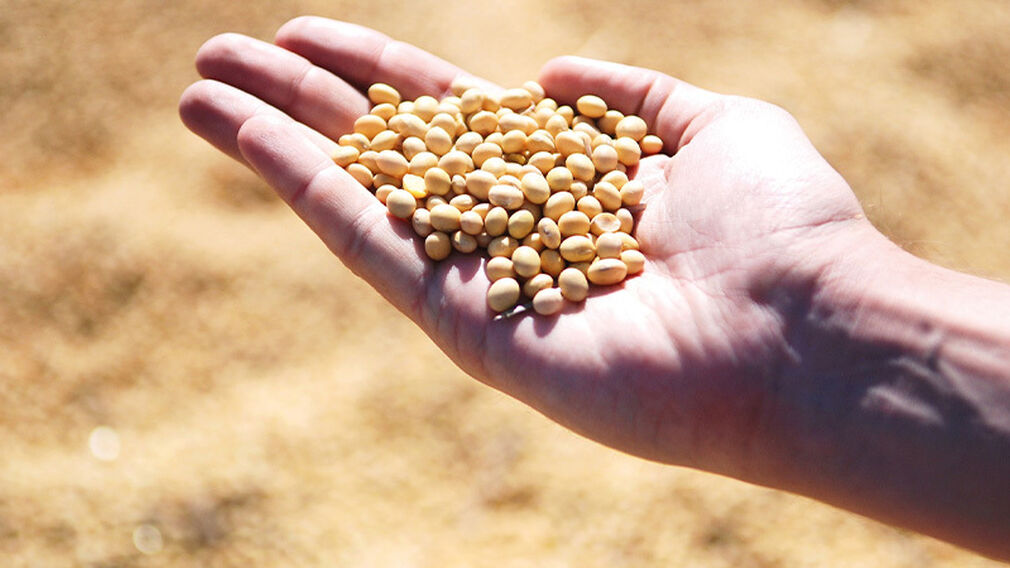
German chemical giant Bayer has unveiled 19 new soyabean varieties ahead of the 2025 planting season, Wyoming Livestock Roundup reported.
Following the new additions, BASF’s Xitavo soyabean seed portfolio would comprise 46 products, the 16 May report said.
“For the 2025 growing season, growers will have more offerings with access to new genetics developed and sold exclusively by BASF in its Xitavo soyabean seed portfolio,” the company said in a press release last July.
“Previously, four companies comprised 98% of the soyabean breeding effort for the US market. BASF is now bringing new … germplasm to the market and, with it, a new source of soyabean varieties.”
BASF said the new varieties included traits to help enhance yields, reduce climate challenge risks and mitigate increasing disease pressure.
In a Farm Progress article, Bill Backhaus, a Midwest agronomist for BASF, outlined key points about the company’s new products:
- All 19 are Enlist E3 varieties with some licensed from other programmes.
- Maturity groups range from 00 to 4.8.
- Some carry Peking resistance for soyabean cyst nematode (SCN).
- Several carry PI88788 resistance.
“Top yields start with seed selection,” Backhaus said. “We emphasise the yield triangle, made up of genetics on the base and environment and management on the two legs. Genetics is first and foremost. Studies show 19.8 bushels of yield variation depending upon which variety you choose.”
Xitavo soyabeans were sold through a retailer network and the goal was to select varieties which best fit farmers’ fields, including accounting for row width, seeding rate preference and tillage type, although differences in plant type were also important considerations, Backhaus explained.
Backhaus said he used the variety profile index (VPI) to classify varieties, which to date comprised high, medium and low ratings.
“Our plant breeders are beginning to utilise it and it helps customers get the best-suited variety into each field,” he said.
Speaking about the new varieties, BASF US soyabean agronomy lead Marc Hoobler said XO 2625E offered a good tolerance to white mould, iron deficiency chlorosis and good standability; XO 2865E offered a solid combination of offensive and defensive characteristics featuring a Rps1c phytophthora source with excellent standability; and XO 3105E featured above-average tolerance to iron deficiency chlorosis, phytophthora and sudden death syndrome with an average yield performance at 102.7% of the test mean.