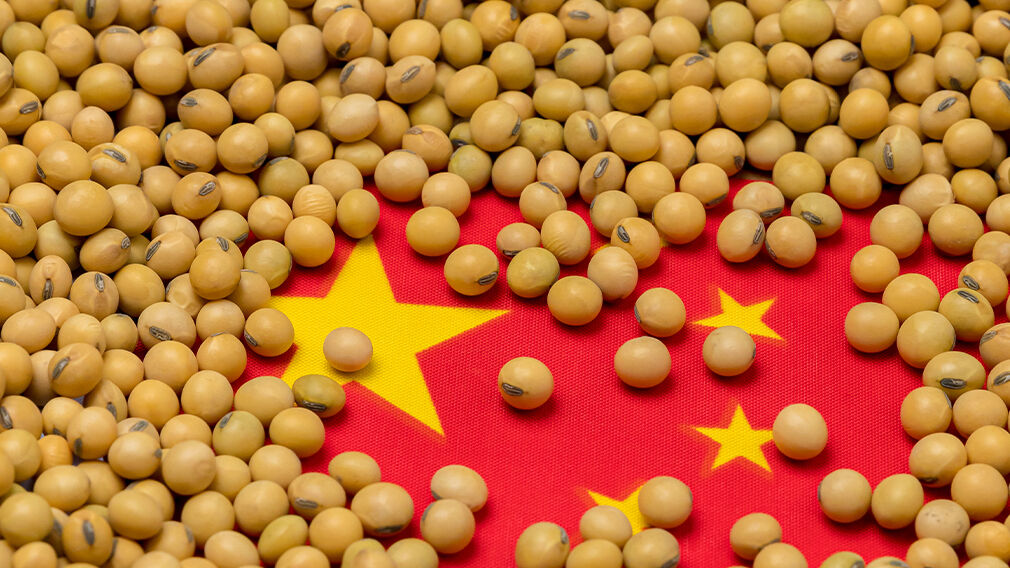
Brazil and China are in the initial stages of developing a dedicated soyabean supply chain to meet Chinese sustainability and quality standards, according to a report by the US Department of Agriculture (USDA).
The production line could boost Brazilian soyabean market dominance while directly challenging US exports, the 23 June report said.
Known as “Soy China”, the initiative was a customised, exclusive soyabean production model designed to meet Chinese import needs and standards, particularly regarding environmental, social and traceability criteria, the “Assessment of Soy China Initiative in Brazil report” said.
The new model had been inspired by the idea of “Boi China” (“China Beef” in Portuguese), which referred to Brazilian cattle and beef produced specifically to meet Chinese import standards, the USDA’s Foreign Agricultural Service (FAS) report said.
Sustainability standards under negotiation for the soyabean initiative were likely to mirror those imposed by the EU Deforestation Regulation (EUDR) but with less strict policies.
The USDA said it expected sustainability efforts for the “Soy China” initiative would mainly focus on defining and monitoring land expansion, as well as strengthening enforcement of Brazil’s low-carbon agriculture policy, with exporters required to submit emissions data.
An increased use of renewable energy sources across the supply chain was also anticipated.
New restrictions could be imposed on certain pesticides currently permitted in Brazil but banned in other major soyabean-producing countries, helping Brazil align with Chinese maximum residue limits, the report said.
In 2024, 71% of China’s soyabean imports came from Brazil, according to Trade Data Monitor.
“Should Brazil produce a soyabean variety specifically tailored to Chinese standards, this share would likely increase, leading to a reduction in soyabean imports by China from other major suppliers, including the USA,” the USDA said.
“Other exporting nations such as Argentina, Uruguay and Canada may also experience marginal impacts. For other countries, particularly in Asia, trade relationships are primarily driven by geographic logistics rather than market realignment. Thus, a trade impact is unlikely to negatively reach other suppliers in that region.”
Brazilian farmers who did not adhere to the new production standards could face reduced demand, as China was the main destination for Brazilian soyabeans and the new Chinese requirements could introduce a shift that not all producers in Brazil would immediately adopt, the report said.
However, the USDA said overall Brazilian soyabean exports were still expected to increase, as this shift would largely remain within the domestic market.
The Soy China initiative also signalled a deeper alignment of Brazil’s export strategy with Chinese agricultural demands, the report said.
While Brazil prioritises the Chinese market for soyabeans exports, this initiative could institutionalise a segmented production line exclusively for China, as the country seeks to expand its influence in the South American agriculture market, according to the report.
“This new focus for Brazilian soyabean exports could pose strategic challenges for US exporters. Over the past few years, US soyabean producers have exported an average of 25M tonnes of soyabeans annually to China. In 2024 alone, these exports were worth more than US$12bn, with China as the largest buyer,” the USDA said.
Since 2009, US market share of soyabean exports to China had steadily declined, leading Brazil to become its top soyabean supplier since 2013, the report said.
Historically, US market share losses have closely aligned with Brazilian soyabean market growth, suggesting that Brazil has consistently served as the primary alternative source for soyabean exports to China when US soyabean exports declined.
“This trend is projected to intensify with the implementation of “Soy China” and amid recent developments such as increased tariffs and ongoing trade tensions,” the USDA said.
Although the initiative promised both economic and ecological advantages, reinforcing Brazil’s position as China’s top soyabean supplier, the USDA said the Brazilian agricultural sector could face transitional hurdles, as the adoption of new cultivation methods for a specific type of soyabean and new sustainability standards could raise production costs.
“The ‘Soy China’ initiative could represent a major pivot in global agricultural dynamics. While Brazil stands to benefit both economically and environmentally, countries like the USA may need to reconfigure their agricultural export strategies to adapt to the shifting landscape,” the USDA said.