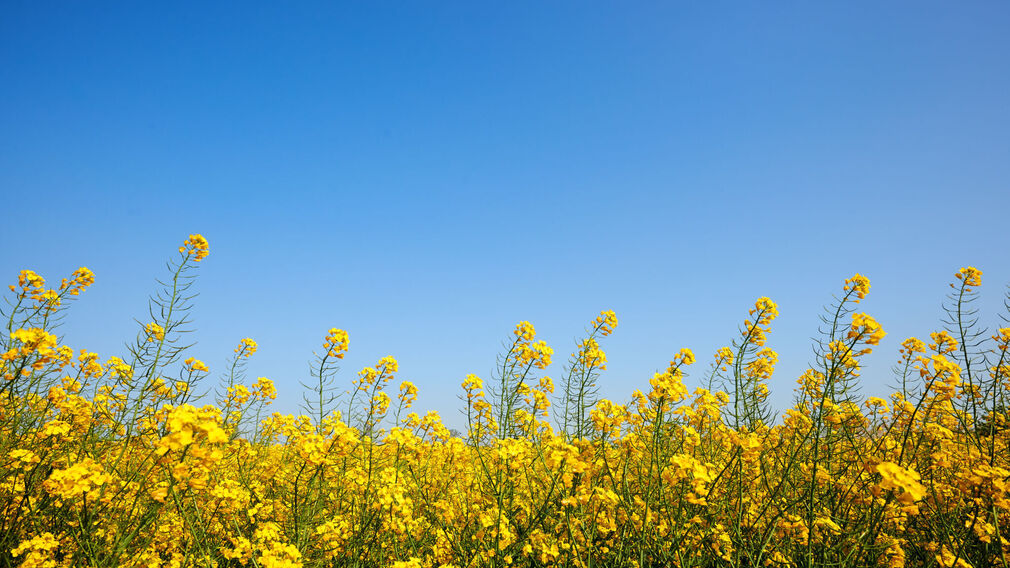
A research team in Canada is testing new gene technology to develop resilient canola, according to a Global News report.
Scientists at Kingston-based Performance Plants have been developing new canola varieties designed to cope with extreme weather, including excess heat and drought, while increasing the amount of carbon stored in the soil, the 11 July report said.
The study was one of nine projects selected for HARVEST, a new agri-tech business accelerator funded by Agriculture and Agri-Food Canada and managed by Ontario Genomics, Global News wrote.
As part of the programme, participating companies were provided with up to US$750,000, along with business mentorship and support, to help bring new agricultural technologies closer to commercialisation.
“These technologies are designed to help improve the economics of Canadian agriculture while lessening environmental impact,” said Mike Dorrington, director and head of food and industrial biotechnology at Ontario Genomics.
The work comes as farmers faced growing challenges from climate change, as governments and industries looked for ways to reduce greenhouse gas (GHG) emissions, the report said.
At Performance Plants, researchers had focused on “precision breeding,” identifying naturally-occurring genes that helped plants respond to environmental stress and enhancing those traits.
Although the company was currently applying the technology to canola, the approach could have broader applications, explained Jiangxin Wan, president and chief technology officer at Performance Plants.
The company had been working with a seed producer to incorporate the technology into existing seed varieties rather than developing completely new ones, Global News wrote.
More testing was required before the technology could be introduced on a wider scale, but the researchers said they hoped it would ultimately give farmers more tools to cope with increasingly unpredictable growing conditions.