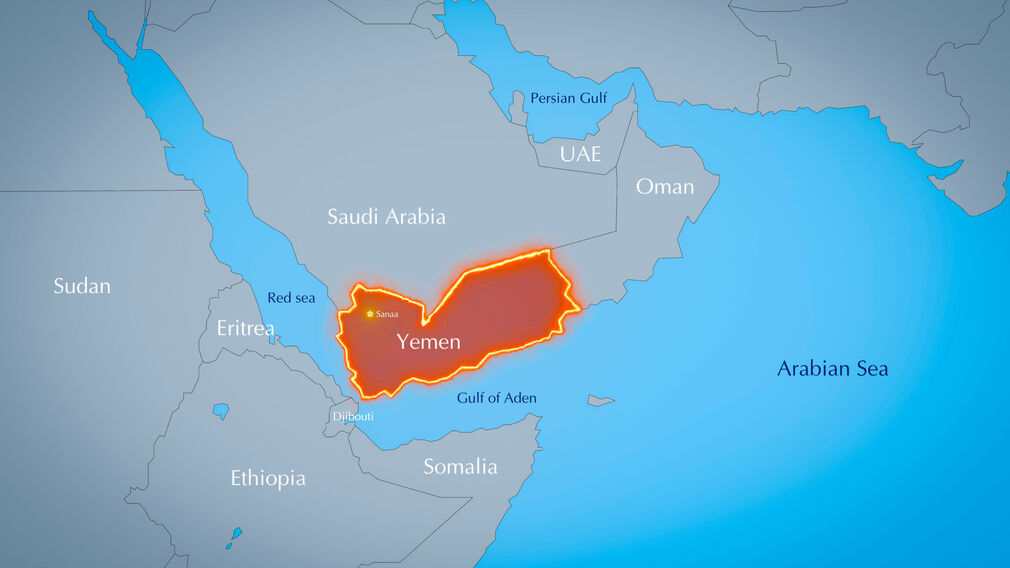
Shipping companies are taking a cautious approach to returning to Red Sea crossings after Yemen’s Houthi rebels said they would end attacks in the area following the ceasefire between Israel and Hamas, according to a FreightWaves report.
“If Israel stops the aggression in Gaza, and if the USA, UK and Israel stop the aggression against Yemen, the Houthis will stop their operations, including attacks against navies and commercial ships,” Houthi spokesperson Mohammed al-Bukhaiti told Arab news service Al Jazeera on 19 January, the day the ceasefire took effect.
Following the announcement, carriers were watching developments in the Red Sea but had no timeline to resume regular schedules there, the 20 January FreightWaves report said.
Of the major shipping lines, only French shipping and logistics company CMA CGM had maintained a schedule on the Suez Canal route, the report said.
A spokesperson for international shipping and container transportation company Hapag-Lloyd told FreightWaves in an email that it would monitor developments and their impact on the security situation in the Red Sea.
“We will return to the Red Sea when it is sufficiently safe to do so. We decided to pause all containership traffic through the Suez Canal and the Red Sea and to re-route our Ships via the Cape of Good Hope in December 2023,” the spokesperson said.
In an email to FreightWaves, global shipping company MSC said “the situation in the Suez Canal remains fluid and the security situation is unclear”.
“In order to guarantee the safety of our seafarers and to ensure consistency and predictability of service for our customers, MSC will continue to transit via the Cape of Good Hope [around Africa] until further notice,” the company said.
Diversions away from the Red Sea had absorbed capacity and pushed up shipping rates to cover higher operating expenses for voyages as much as two weeks longer than normal, FreightWaves wrote.
As a result, carriers had seen profits surge by billions of dollars in late 2024, the report said.
However, with negotiations on 2025 ocean rates underway, a range of factors could moderate prices, including a return to less costly sailings on the Suez route and the deployment of new ships, FreightWaves wrote.
The Iran-backed Houthis, a rebel militia that controls about 40% of Yemen, began attacking merchant ships they claimed were linked to Israel and Israel-supporting countries in the Red Sea-Suez Canal route shortly after the terrorist attacks by Hamas on Israel on 6 October 2023.
The attacks had reshaped the global supply chain as major container and crude oil tanker lines connecting Asia, Europe, the Mediterranean and USA had diverted away from the region, taking longer voyages around the Horn of Africa, the report said.
A multinational force of US and European Union naval operations have taken up patrols of the Red Sea and Gulf of Aden, escorting vessels and turning back Houthi strikes.
Two merchant seamen had been killed in the Houthi attacks, and two vessels and their crew remained captive in Yemen and Iran, at the time of the report.
The ceasefire between Israel and Hamas began on 19 January with an exchange of Israeli hostages from Gaza and Palestinian prisoners held in Israel. Later phases will include the withdrawal of Israel from Gaza.
Meanwhile, US and UK forces had continued to carry out strikes on Houthi targets inside Yemen, the report said.
However, attacks against shipping have been declining as the Houthis shifted to more direct attacks on Israel, according to the report.