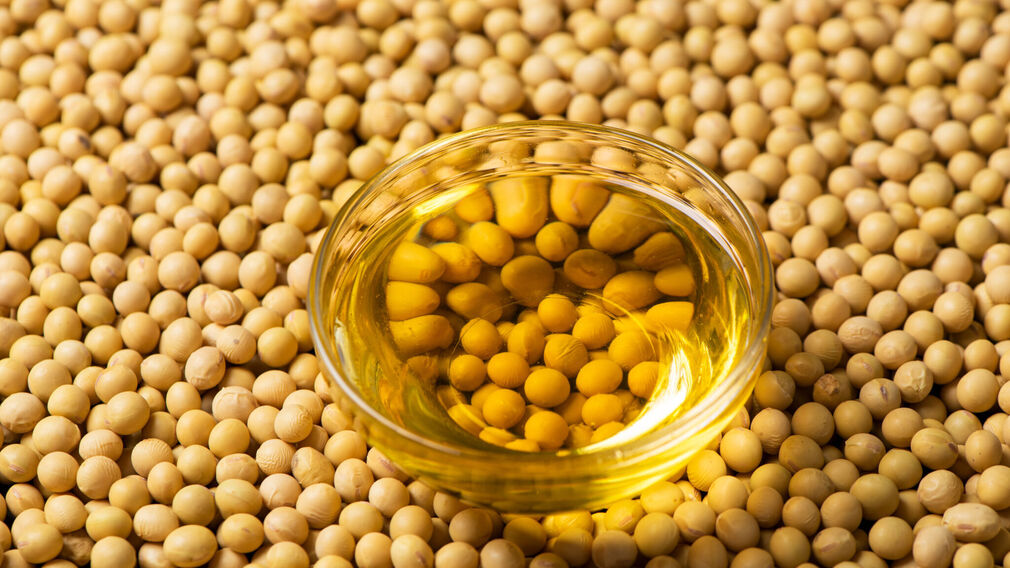
Scientists from St Petersburg State University have developed a new magnetic catalyst for use in the production of biodiesel from soyabean oil.
Although biodiesel produced from vegetable oils by transesterification was one of the most promising types of renewable fuel, it was essential to ensure the repeated use of substances that accelerated the reaction to reduce costs and the volume of waste generated, an 18 March report on the university’s website said.
However, in practice, the regeneration and reuse of such materials remained challenging, the report said.
In their research, the team created a new magnetic composition from industrial waste and, through experimentation, identified the most effective regeneration method for it.
As part of a series of tests, the researchers conducted a direct comparison of the three main recovery methods – filtration, centrifugation and magnetic extraction – for the same sample under identical biofuel production conditions.
The results – published in February in the scientific journal Bioresource Technology Reports – identified the optimal method for preparing the material for industrial use.
“We solved two key problems simultaneously: we created an inexpensive composition from production waste and, equally importantly, identified an optimal regeneration method for it,” said Konstantin Rodygin, co-author of the study and associate professor in the Department of Organic Chemistry at St Petersburg State University.
“Our experiments demonstrated that, for such systems, vacuum filtration ensures maximum preservation of the active component and a high product yield, while magnetic extraction proved to be the least effective method.”
The scientists synthesised a new magnetic system based on calcium oxide and magnetite, using carbide slag – a readily available industrial waste product from acetylene production – as the raw material.
They then conducted a series of experiments on biodiesel production from soyabean oil.
Although the same material was used in all experiments, it was recovered using different methods: magnetic extraction; centrifugation and vacuum filtration.
After each cycle, the researchers measured the yield of the final product as well as the mass of the active composition preserved for subsequent use.
Additional analysis showed that – regardless of the extraction method – the active phase of the catalyst irreversibly transformed into less active compounds, such as calcium hydroxide and calcium diglyceroxide, during the reaction.
The experiments highlighted significant differences between the recovery methods. Magnetic extraction was the least effective: after five cycles, the loss of the active component reached 72% and the biodiesel yield decreased to 84%.
Using the centrifugation method, approximately 67% of the material was returned to the process by the fifth cycle, but its activity declined and the biofuel yield fell to 82%.
Vacuum filtration produced the best results, providing an optimal balance between preserving the active phase and maintaining process stability. By the fifth cycle, up to 81% of the working composition mass was preserved and the biodiesel yield remained high, at around 90%.