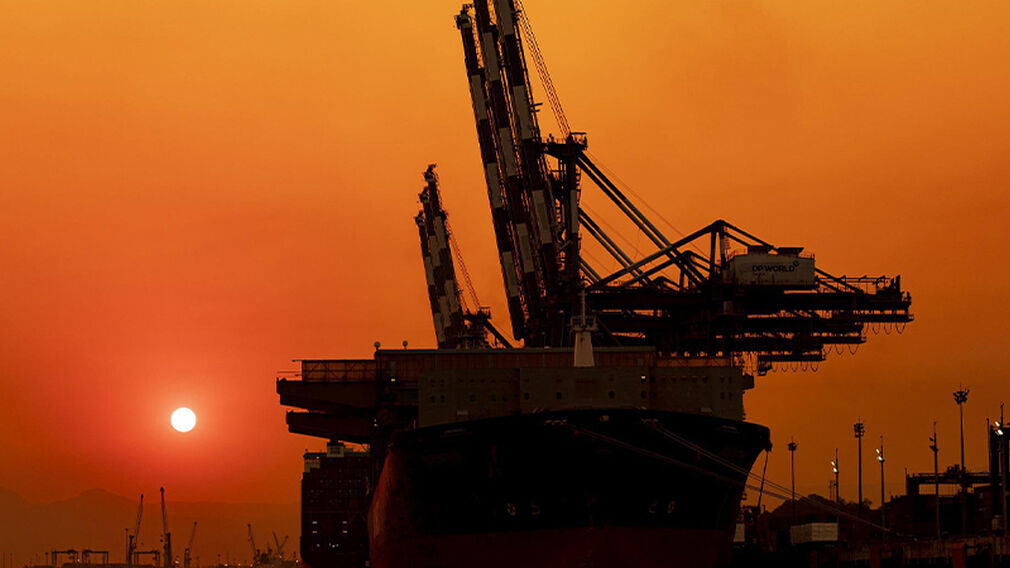
China is increasing its stake in Brazilian ports in a bid to reduce its dependence on US food imports, according to a Blueberries Consulting report.
Although China had reduced its dependence on US food, crops remained among the USA’s top exports to the nation, the 15 May report said.
Located on the São Paulo state’s coastline, the Port of Santos is the largest in Latin America connecting more than 600 ports in 125 countries. It is also the most important foreign trade route in Brazil with almost 27% of the country’s trade balance (US$112.3bn) passing through the port, according to Santos Port Authority.
The port of Santos is also the main gateway for South American exports of soyabeans and other agricultural products, which represent China’s only viable alternative to US exports, according to the Blueberries Consulting report.
Against this backdrop, China’s largest food and agricultural company COFCO International was building its largest export terminal outside China at the Port of Santos to handle shipments of corn, sugar and soyabeans, Blueberries Consulting wrote.
In March 2022, COFCO had secured a 25-year concession to develop the STS11 terminal at the Port of Santos, committing to invest approximately US$285M in the site, the report said.
In other moves, the Chinese state-owned port conglomerate China Merchants Port Holdings had acquired a 90% stake in a Paranaguá port operator for US$925M in 2017, and the state-owned China Railway was also building part of a railway connecting Brazil’s central agricultural belt with ports in eastern and northern Brazil, Blueberries Consulting wrote.
By 2023, Brazil accounted for about a quarter of China’s agricultural imports, while the USA’s share had fallen to about 14%, according to government data.
At the time of the report, Brazil supplied about 70% of soyabean shipments to China, of which about 30% passed through Santos, with a smaller proportion shipped through Paranaguá and the northern ports of Itaqui and Barcarena.
As of 2006, the Port of Santos was the busiest container port in Latin America and last year handled a record 180M tonnes, 60% of which were agricultural products.