


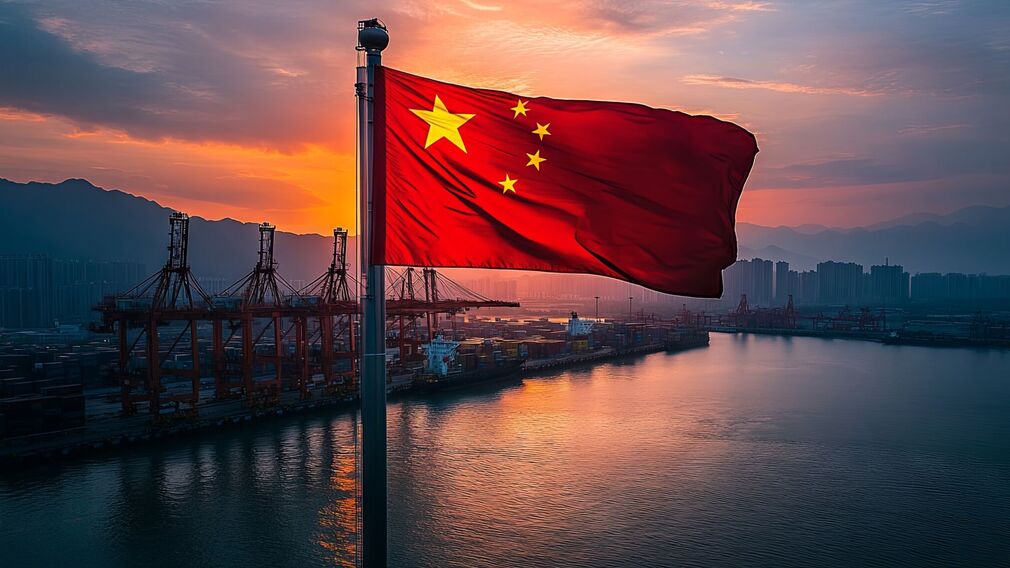
The Chinese government has revised its international maritime transport rules to allow for retaliatory measures in advance of new US port fees targeting China-built or operated vessels coming into effect in two weeks, MSN reports.
The changes did not name specific countries but were clearly in retaliation for the costly US port fees taking effect on 14 October, aimed at making China’s ocean trade with the USA more expensive, Freight Waves wrote on 30 September.
China will implement necessary counter-measures against any country or region that imposes or supports discriminatory bans, restrictions or similar measures targeting Chinese operators, vessels or crews, according to the 30 September MSN report, citing a South China Morning Post (SCMP) article.
“These counter-measures include, but are not limited to, charging special fees on their vessels when calling at Chinese ports, prohibiting or restricting these vessels’ port access in China, and barring or restricting their organisations or individuals from accessing China-related maritime data or operating in international shipping and related services to and from Chinese ports,” said the revision, published on 29 September and taking effect immediately.
Earlier this year, the USA announced it was introducing port fees on Chinese-linked ships, including a US$50/tonne charge for each trip, increasing incrementally to US$140/tonne by 2028. For Chinese-built ships, there would be a fee of US$18/tonne, increasing to US$33/tonne by 2028.
The US Trade Representative proposed the port fees following a Section 301 investigation of China’s shipping and shipbuilding, which found that China had allegedly used unfair trade advantages to attain dominance in the sectors.
The trans-Pacific shipping route has seen considerable volatility this year, driven by retaliatory measures between the world’s two largest economies, and carriers have been adjusting vessel deployments on the route to avoid or minimise exposure to the coming US port fees, according to the SCMP report.
China’s move would further complicate shipping routes connecting the two countries, according to Guotai Junan Futures.
Beijing’s retaliatory measures could target US vessels, including those under US flags or owned by US companies, such as the Matson shipping company and American President Lines, a unit of CMA CGM of France, Freight Waves wrote.
Although the revision did not specify how to determine a vessel’s nationality or origin – such as by ownership or flag – the USA’s share of shipping capacity was minor under either criterion, the SCMP report said.
The US-flagged fleet accounts for 0.6% of global deadweight tonnes, while vessels flagged in mainland China and Hong Kong combined account for 13.9%, according to the United Nation (UN)’s 2025 Review of Maritime Transport published the week before the report.
State-owned Chinese shipping giant Cosco holds the third largest share (10.6%) of global container capacity, according to the report.
However, if China applies an all-encompassing definition to US vessels, such as ownership deemed to be held by a US company through financing, listing on US exchanges, or chartering by US entities – there could be a significant impact, according to Jayendu Krishna, a director at Drewry Maritime Services.
