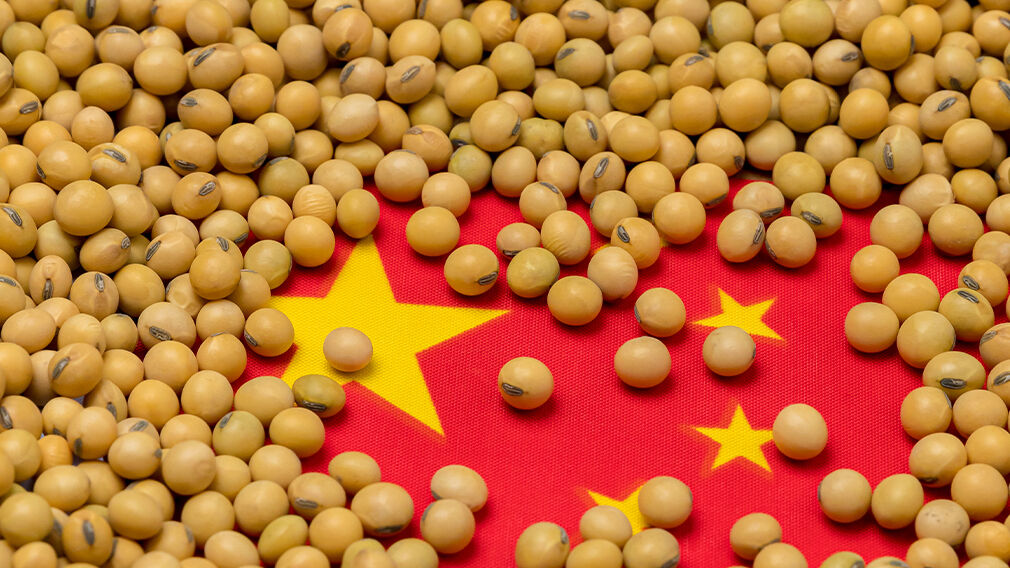
The Chinese government has indicated it would “deeply participate” in agricultural trade and expand imports of products in short domestic supply, the South China Morning Post (SCMP) reported a senior official as saying.
Despite a tight balance between production and demand, China would diversify import sources and make full use of international markets, Han Wenxiu, head of the office of the Communist Party’s rural affairs leading group, said.
The development signals strong demand for soyabean imports in the country, according to the 4 February report.
Wenxiu’s remarks followed the publication of Beijing’s 2026 rural blueprint, known as the “No 1 Document” and traditionally the leadership’s first policy directive of the year, SCMP wrote.
The blueprint pledged to boost soyabean output by prioritising yields and better aligning domestic production with trade, marking a shift from Beijing’s years-long emphasis on expanding planting acreage to curb dependence on major overseas suppliers such as the USA, the report said.
“We will actively pursue broader and higher-level opening-up, including in agriculture,” Wenxiu said, while adding that “it is essential to appropriately regulate the pace and extent of farm product imports to protect national food security”.
His remarks were consistent with Beijing’s commitment to buy at least 25M tonnes/year of US soyabeans to 2028, a figure announced by the White House, under a trade deal between the two countries in October, the report said.
China has sought to balance sourcing from overseas markets with protecting domestic agriculture, according to the report.
Due to soyabeans’ crucial role as a source of edible oil, the document called for efforts to diversify supply by expanding the cultivation of rapeseed, peanuts, oil tea camellia and other oil-bearing crops.
To meet growing feed demand, Beijing had increased investments in research and development on high-yielding soyabean varieties, the report said.