


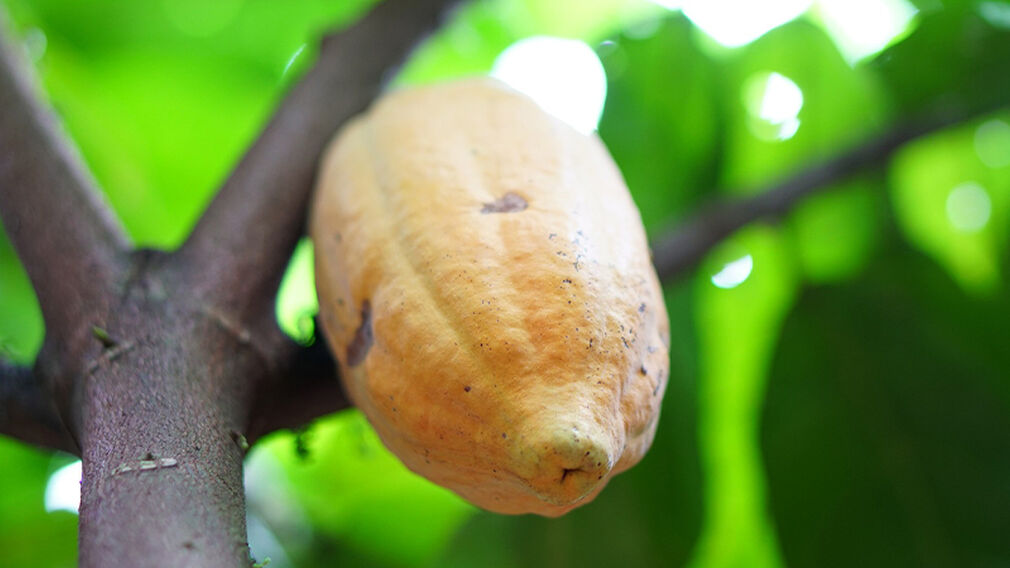
Following a surge in the cost of cocoa in 2024, prices have since slumped, along with cocoa butter prices.
Cocoa prices have fallen to three-year lows as market fundamentals increasingly point to oversupply, according to a 4 March Lipsa report.
Latin American origins were reporting strong export performance, while global demand remained subdued, the report said.
As a result, a global cocoa bean surplus of 400,000-500,000 tonnes was expected in 2025/2026, Lipsa wrote.
According to a 9 March Cocoa Intel report, the 26 March New York cocoa contract stood at around US$3,230/tonne, compared with the highs of US$10,000/tonne in 2024.
With much of the world’s cocoa produced in Ghana and Ivory Coast, where state regulators set the price a year in advance, the recent collapse in prices had made their beans around 40% more expensive than international traders were willing to pay, the BBC wrote on 9 March.
The drop in cocoa prices was due to a good global harvest coming at a time of lower demand, alongside manufacturers making smaller chocolate bars and using less cocoa in response to previous higher prices, The Guardian wrote.
Although the knock-on effect should lead to a reduction in chocolate prices, it had impacted the cocoa industry in Ghana and Ivory Coast, the report said.
Even when prices were high, West Africa’s cocoa farmers – many farming in remote areas deep in the jungle with poor infrastructure – felt they were not seeing the benefits, according to the report.
Some cocoa farmers said the Ghana Cocoa Board (Cocobod), which licenses companies to buy the country’s crop for international sale at a set price, was responsible for the situation, The Guardian wrote.
As those companies had not been able to sell the cocoa this year, Cocobod had stepped in to buy much of it to save the industry from collapse, but many farmers claimed they hadn’t been paid, the report said.
According to the report, the payment delay was estimated to be affecting around 800,000 cocoa farmers.
In October, Cocobod had set the amount to be paid to farmers at nearly US$5,300/tonne, but the price on the global market had fallen to below that level, the report said.
The shortfall had added to the board’s debt, which totalled around US$3bn at the time of the report.
Acknowledging there had been delays in farmers being paid, the board’s spokesperson Jerome Sam said payments were now being processed.
Cocoa accounts for about 7% of Ghana’s gross domestic product (GDP) and exports of the commodity make up around 15% of the country’s foreign exchange earnings, according to the report.
To support the sector, the government had announced a range of measures, including plans to process more of the crop within Ghana, rather than converting the raw bean into chocolate and other products outside the country, The Guardian wrote.
In a bid to resolve the debt issue, Cocobod had dropped the price it guaranteed to farmers to around US$3,500/tonne, although this was still above current prices, The Guardian wrote.
Neighbouring Ivory Coast, the world’s leading cocoa producer, has been hit by similar problems, according to the report.
The country’s equivalent of Cocobod – the Coffee and Cocoa Council – had also guaranteed a price last year that was above the international price at the time of the BBC report.
“More than 800 cocoa farmers give their beans to us to sell, but this year it has been very difficult to sell them,” Bahily Bakouli Issiaca, a member of the Bangolo cocoa co-operative, told the BBC.
On 4 March, the country’s Agriculture Minister Bruno Kone announced that the price paid to farmers would be cut in half in a bid to boost sales.
Without the measure, Ivory Coast was set to have about 200,000 tonnes of cocoa waiting for buyers by the end of March, the BBC wrote.
Meanwhile, cocoa butter prices had also dropped, according to the 4 March Lipsa report.
The drop in cocoa butter prices had led manufacturers to reformulate their products, replacing cocoa butter alternatives – which had previously replaced cocoa butter when prices for the commodity were high – with cocoa butter, the report said.
The rapid decline in cocoa butter prices had also made it difficult for shea stearin (used to produce cocoa butter equivalents) to compete with the commodity as shea nuts remained expensive and production costs were still high, the report said.
According to Lipsa, shea nuts were around US$900/tonne in Ghana and US$650 in Burkina Faso.
Although a potential decrease in shea stearin prices was most likely to occur with the start of the new season (May-June), the situation was expected to persist for the remainder of the season, Lipsa wrote.
