


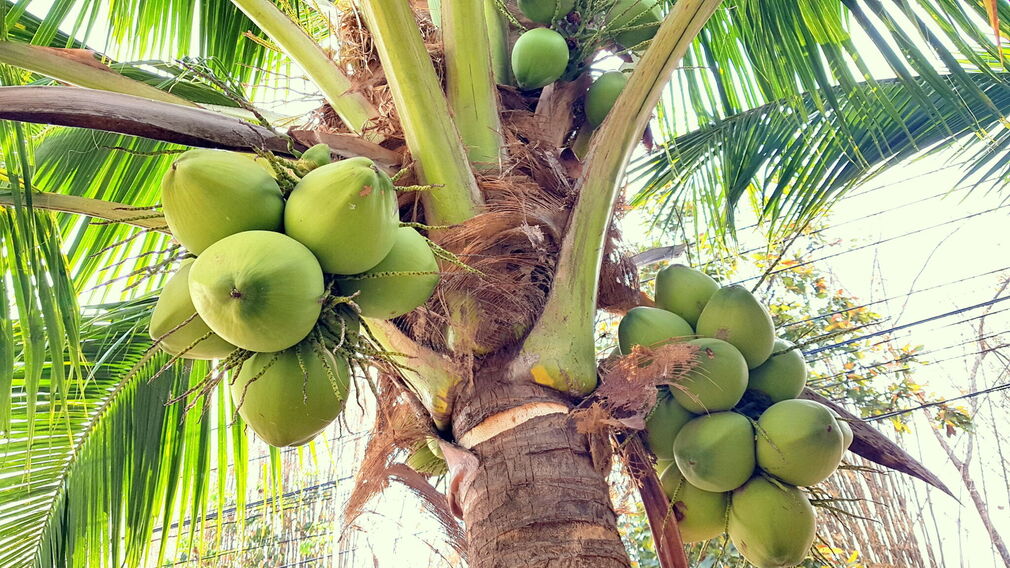
Nigerian coastal city Lagos and other coconut-producing areas in West Africa are aiming to claim a share of the global coconut market, which is forecast to reach US$18.6bn by 2033, according to a The Nation report.
Published by DataHorizzon Research, the figure represented a near doubling from the market’s 2025 valuation of US$11.2bn, driven by a compound annual growth rate (CAGR) of 7.4%, the 25 May report said.
Lagos state commissioner for Agriculture and Food Systems Abisola Olusanya said Lagos was positioning coconut development as a strategic component of its climate and economic agenda.
“We are not treating coconut as just another crop. Lagos is building an integrated coconut economy that supports jobs, processing, exports, climate resilience and sustainable agriculture,” she said.
As part of that drive, the country’s Coconut Development Authority had increased support for farmers and agribusiness operators across the value chain, she said.
The authority’s programmes had reached 2,139 stakeholders within the past year including 1,470 farmers, 480 marketers and 189 processors, through training and capacity-building initiatives designed to strengthen the industry, Olusanya explained.
In addition, the state government had made infrastructure investments, including solar-powered industrial boreholes and ongoing construction work at seedling production sites in Iligbo and Ise, she added.
Coconut development had also been included as a strategic initiative in Lagos state’s recently issued Green Bond, Olusanya explained.
The initiative was expected to finance an Accelerated Coconut Value Chain Development Programme while also supporting carbon credit generation.
Speaking to The Nation, Olufemi Oladunni, CEO at the Agricultural and Rural Management Training Institute (ARMTI), said Nigeria had the capacity to improve its standing as a major player in the global coconut market in terms of output and sustainable export growth.
The sector required stronger support mechanisms to empower farmers with modern practices to help them better manage their plantations and improve yields, he explained.
According to Dr Olusoji Oduwole, a senior researcher at the Cocoa Research Institute of Nigeria (CRIN), farmers needed to be provided with improved seedlings and equipped to become more resilient to fluctuations in the global coconut market.
Nigeria currently produced an estimated 224,000 tonnes/year of coconuts, the report said.
However, in terms of export sales the country was behind Ghana and remained largely dependent on domestic consumption, The Nation wrote.
Ghana was also following an ambitious expansion strategy as the global fresh coconut market continued to grow rapidly, the report said.
At a recent farmer training event in Kumasi, the director of Presidential Initiatives in Agriculture and Agribusiness, Peter Boamah Otokunor, urged farmers to move beyond raw coconut sales and focus on adding value.
“Selling unprocessed coconuts keeps farmers trapped at the lower end of the value chain. The future lies in processing, packaging, branding and exporting premium coconut products to international markets,” he said.
Ghana plans to double its coconut cultivation area from 90,000ha to 180,000ha by the end of 2028, according to the report.
The country currently produces more than 500,000 tonnes/year of fresh coconuts, supporting the livelihoods of almost 1.8M people.
Ghana accounts for about 24% of Africa’s total coconut output, making it the continent’s leading producer and the world’s 12th largest coconut producer.
In 2025, the Ghanaian government had distributed more than 3M improved seedlings to farmers, resulting in an additional 31,500ha of plantation coverage, the report said.
Under the broader expansion programme, Ghanaian authorities now planned to distribute 11M high-yield, disease-resistant seedlings, the report said.
