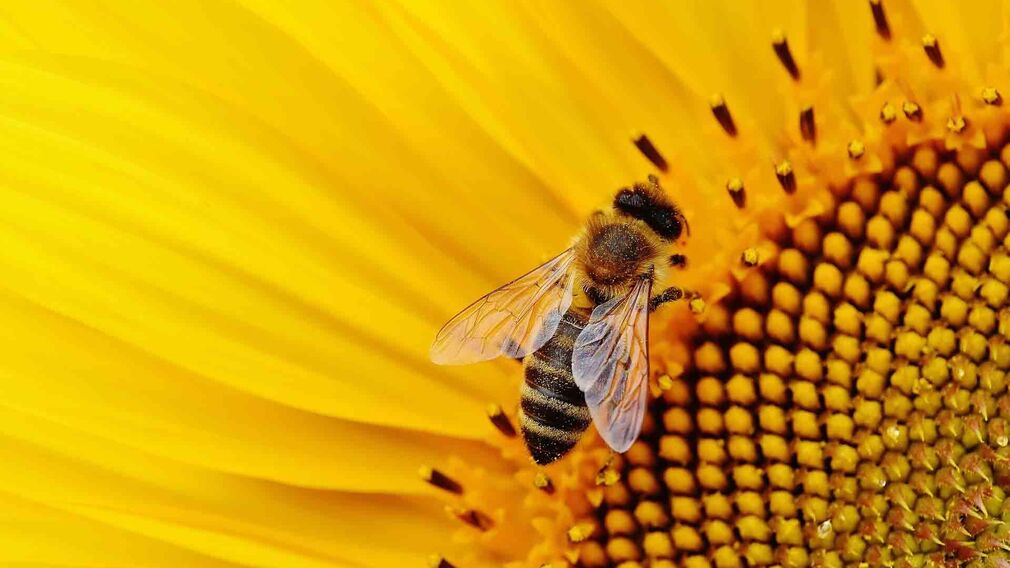
The European Court of Justice (ECJ) has put an end to the emergency use of neonicotinoid pesticides, which are widely linked to the decline of bees, Euractiv reported.
Member states would no longer be allowed to grant derogations temporarily permitting the use of seeds treated with ‘expressly banned’ plant protection products by European Union (EU) law, the 19 January report said.
The ruling came in the wake of a request for annulment before the Belgian Administrative Court on the derogation given by Belgium for the use of neonicotinoids on sugar beets. The request was brought by the campaign groups Pesticide Action Network (PAN) Europe and Nature & Progrès Belgium, with a Belgian beekeeper.
The specific weedkillers – imidacloprid, clothianidin and thiamethoxam – belong to a class of pesticides known as neonicotinoids, which are chemically similar to nicotine and target insects. They are used to protect crops such as cereals, oilseed rape and sugar beet from damaging pests such as aphids.
Neonicotinoids had faced criticism in recent years for contributing to the decline of bees by disrupting their sense of orientation, memory and mode of reproduction, the report said.
Partial restrictions on the use of these products on bee-attractive crops were imposed by the European Commission (EC) in 2013, followed by a ban on all outdoor use in May 2018.
In 2021, the ECJ confirmed that the EC was right to ban the use of neonicotinoids following an appeal by German chemical giant Bayer, the producer of the pesticides.
The latest ruling concerned six authorisations issued by the Belgian state for the use of these plant protection products on the basis of ‘emergency situations’ – where danger or threat to plant production or ecosystems cannot be contained by other reasonable means.
For this reason, the Court concluded that “as regards seeds treated with plant protection products containing substances expressly prohibited, […] the [EU] legislature did not intend to allow member states to derogate from such an express prohibition.”
In addition, the ruling highlighted “the obligation of all member states to take all necessary measures to promote low pesticide input pest control, giving priority to non-chemical methods wherever possible”.
The ruling was welcomed by the campaign groups that had requested the annulment of the derogations, the report said.
“This landmark ruling of the EU Court puts an end to 10 years of abuse by member states, with the blessing of the European Commission,” Hans Muilerman, chemical officer at PAN Europe, was quoted as saying.
According to a recent report by PAN Europe, EU countries granted over 236 derogations of banned pesticides over the last four years, with neonicotinoids accounting for nearly half of those (47.5%).
The ruling was also welcomed by a representative of CropLife Europe, which represents Europe’s plant protection product industry, who said the ruling “gives further clarity on when derogations may be authorised by member states”.
However, the representative said that the reasons why farmers resorted to derogations were ‘manifold’, noting that the use of repeated derogations is a “symptom of poor implementation of aspects of the current regulation”.
“While we don’t agree with resorting to derogations on a regular basis, we believe in the principle of allowing farmers access to tools to protect their crops when they have no other option.”