The world food price gauge – the FAO Food Price Index (FFPI) – climbed for the third consecutive month in April mainly due to rising vegetable oil prices, the United Nations’ (UN) Food and Agricultural Organization (FAO) announced.
The world food price gauge – the FAO Food Price Index (FFPI) – climbed for the third consecutive month in April mainly due to rising vegetable oil prices, the United Nations’ (UN) Food and Agricultural Organization (FAO) announced.
Against a backdrop of elevated energy costs and disruptions caused by the conflict in the Middle East, the index - which tracks monthly changes in the international prices of the most globally traded food commodities - averaged 130.7 points in April, up 1.6% from its revised March level and 2% higher than the previous year, the FAO said on 8 May.
“Despite the disruptions linked to the crisis in the Strait of Hormuz, global agrifood systems continue to show resilience. Cereal prices have increased only moderately so far, supported by relatively strong stocks and adequate supplies from previous seasons,” said FAO chief economist Máximo Torero.
“Vegetable oils, however, are experiencing stronger price increases, driven largely by higher crude oil prices, which are increasing demand for biofuels and putting additional pressure on vegetable oil markets.”
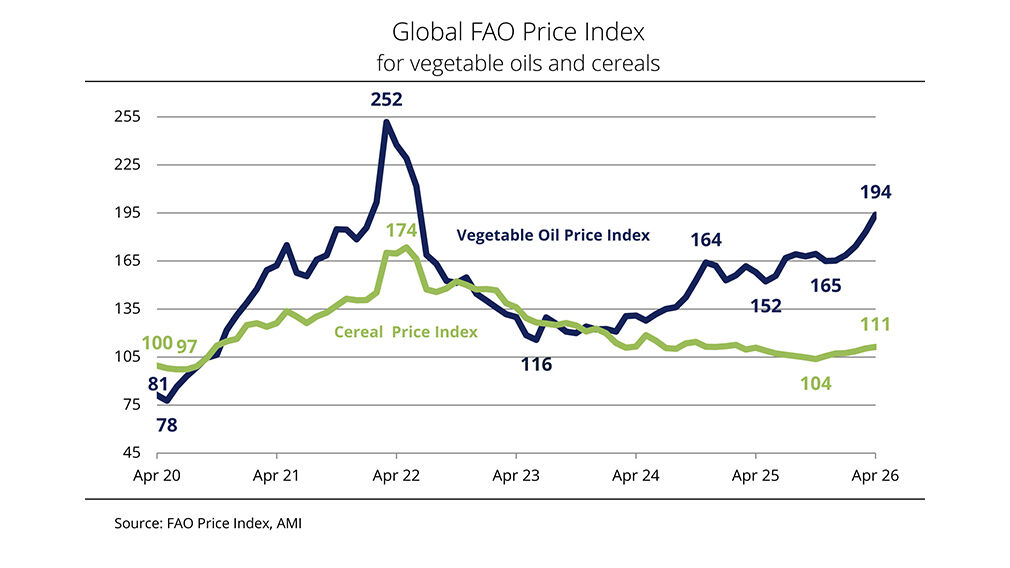
The FAO Vegetable Oil Price Index increased by 5.9% from March, reaching an average of 193.9 points – its highest level since July 2022 – driven mainly by higher prices of palm, soyabean, sunflower and rapeseed oils.
International palm oil prices rose for the fifth consecutive month in April, underpinned by expectations of rising demand from the biofuel sector, policy incentives in major oil-producing producing countries and higher crude oil prices. Additional upward pressure stemmed from concerns over lower production in Southeast Asia, the FAO said.
The FAO’s vegetable oil price index illustrates the changes in international prices of the 10 most important vegetable oils in world trade, weighted according to their export shares.