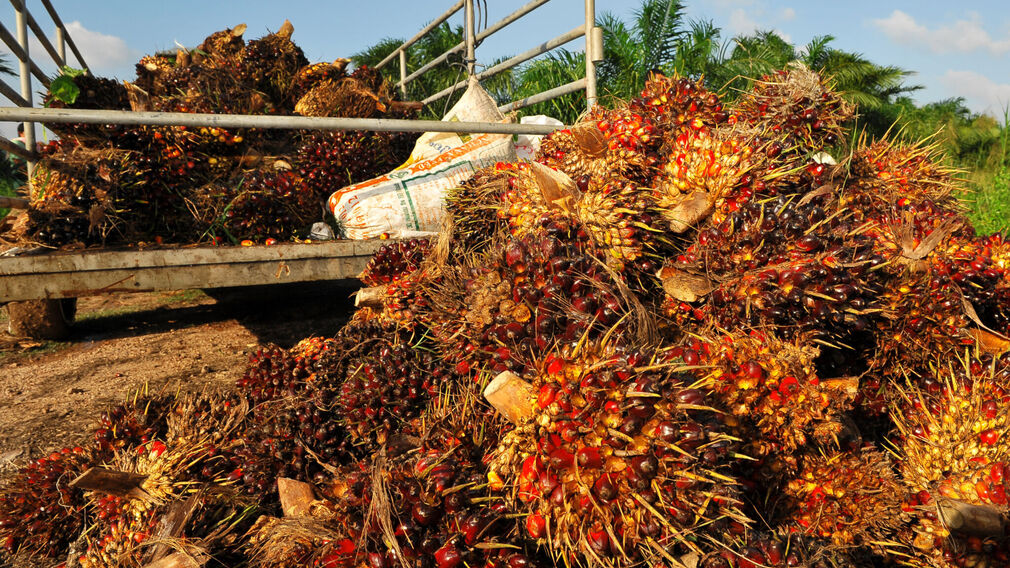
Palm oil output in Sabah – one of Malaysia’s key producing states – was set for a sharp decline due to heavy rainfall and flooding at plantations in the region, The Edge Malaysia wrote.
Production in February could fall by 15%-17% compared to the previous month, Prakash Arumugam, the chairman of the Malaysian Palm Oil Association (MPOA)’s Sabah branch, was quoted as saying.
Prolonged rain in the four weeks prior to the 27 February report had triggered frequent flooding across estates, particularly in low-lying areas.
High water levels had submerged younger palms, damaged roads and disrupted harvesting and the transportation of palm fruit, the report said.
Malaysia is the world’s second largest palm oil grower and Sabah and Sarawak – both located on the island of Borneo – are the country’s top two producing states, each accounting for about 22% of national output.
At the time of the report, more than 5,800 people had been evacuated following flooding in Sabah, according to state news agency Bernama.
Prior to the flooding, Malaysian production had been expected to drop in February due to seasonal lows and shorter working days amid the holiday season, The Edge Malaysia wrote.
The palm oil association, which represents growers nationwide, estimated in the week of the report that national output had fallen 12% in the first 20 days of February compared to the previous month led by double-digit percentage drops in Sabah and Sarawak.
In the two weeks prior to the report, large areas of Sabah had received rainfall up to 150mm above normal levels and large areas of Sarawak had seen rainfall up to 100mm above average, according to US Climate Prediction Center data.
According to a forecast from the climate centre, rainfall was set to ease, with drier weather in the week to 10 March.
Meanwhile, palm oil prices are expected to gradually improve in the coming months, supported by stronger Malaysian exports in the first quarter, according to a Malaysian Palm Oil Council (MPOC) report.
Additionally, Indonesia’s front-loading of shipments ahead of its 1 March crude palm oil export levy hike from 10% to 12.5% was projected to lower palm oil stocks in both countries, the 24 February report said.
The MPOC said Malaysia’s palm oil output declined seasonally to 1.58M tonnes in January, a 13.8% drop compared with the previous month. Exports rose to 1.48M tonnes, up 11.4% from December, the second highest monthly export level in the past year.
The increase in exports was mainly driven by stronger demand from India and Egypt, with shipments to India hitting a 15-month high and exports to Egypt reaching a 13-month peak.
On the demand side, India was again likely to increase its palm oil consumption due to improved price competitiveness since late 2025, MPOC said.
“Palm oil consumption in India is forecast to rise by 800,000 tonnes in 2026, while soyabean and sunflower oil consumption is expected to decline by a combined 400,000 tonnes,” the organisation said.
“The January 2026 data reflects this shift, with India's palm oil imports rising to a four-month high, while soyabean oil imports fall to an 11-month low.”
MPOC said that limited near-term supply, stronger demand from India, and firm US soyabean oil prices were expected to support palm oil prices.
However, potential increases in palm oil prices could be partially capped by rising soyabean crushing, particularly in China, the organisation said.
“The country became a net exporter of soyabean oil for the first time in 2025 and is expected to maintain this position in 2026, with exports projected at around 850,000 tonnes. India accounted for nearly half of China’s soyabean oil exports last year,” the MPOC said.
“Palm oil prices are therefore projected to consolidate within the range of MYR4,000–MYR4,300 (US$1,012-US$1,088) per tonne in March.”