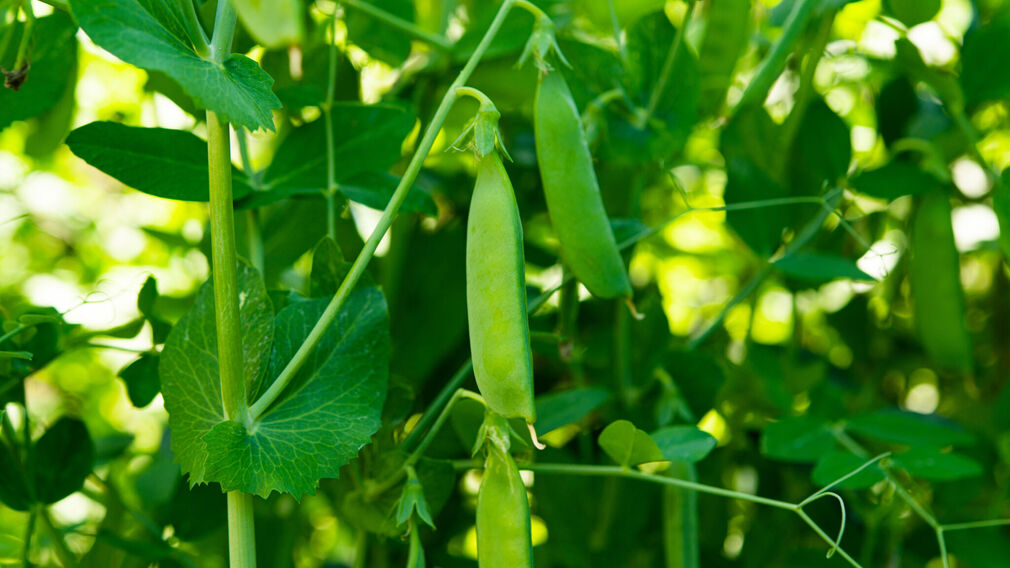
A research team in the UK has developed a flavourless pea as an alternative soya protein, the Observer reported.
With its bland taste, soya can mimic other foods and forms a key base for vegetarian burgers and other meat substitutes, while also being used to increase the protein levels of manufactured meats.
The UK imports almost 4M tonnes/year of soya protein, according to the 29 March report.
Although peas have not been able to be used as an alternative to soya due to their distinctive flavour, the Pea Protein Project – a collaboration between the John Innes Centre (JIC), seed specialists Germinal, Aberystwyth University and the Processors and Growers Research Organisation – has developed a flavourless variety, the Observer wrote.
The team is running field tests with the new pea with a view to developing a commercially viable crop, according to the report.
Traditionally, growing peas has involved finding a balance between the vegetable’s flavour while avoiding the bitterness caused by its micronutrients, according to Prof Claire Domoney of the JIC.
“Growers have to harvest very, very quickly,” Prof Domoney was quoted as saying.
“Otherwise, if they leave it hanging around, it develops these off-flavours.”
The flavourless breakthrough was a stroke of luck, she explained.
“I met one of the breeders and he said, ‘We’ve had to stop the breeding programme because we’re not just losing our off-flavours, we’re ending up with a pea that tastes of nothing’,” she explained.
Domoney’s JIF colleague Prof Steve Penfield is also working on a way to change the flavour profile of foods that are too bitter for human tastes, such as rapeseed meal, according to the report.
“At the moment, we send this meal to animal food,” Penfield said. “The idea is to make it palatable for people.”
However, removing bitterness could end up reducing the healthy antioxidant effects of some foods, according to the report.
“Bitterness probably has a role in protecting crops against insects,” Penfield explained. “So, it might not be sensible to remove it by breeding.”
Instead, the researchers hope to remove the protein which the bitter flavonoid compound binds to from the rapeseed.
“Hopefully, we can make it less bitter and easier to extract.”
In a 2023 study using gene editing and DNA sequencing technology, Canadian biologists were able to isolate and remove genes from yellow peas, the Observer wrote.