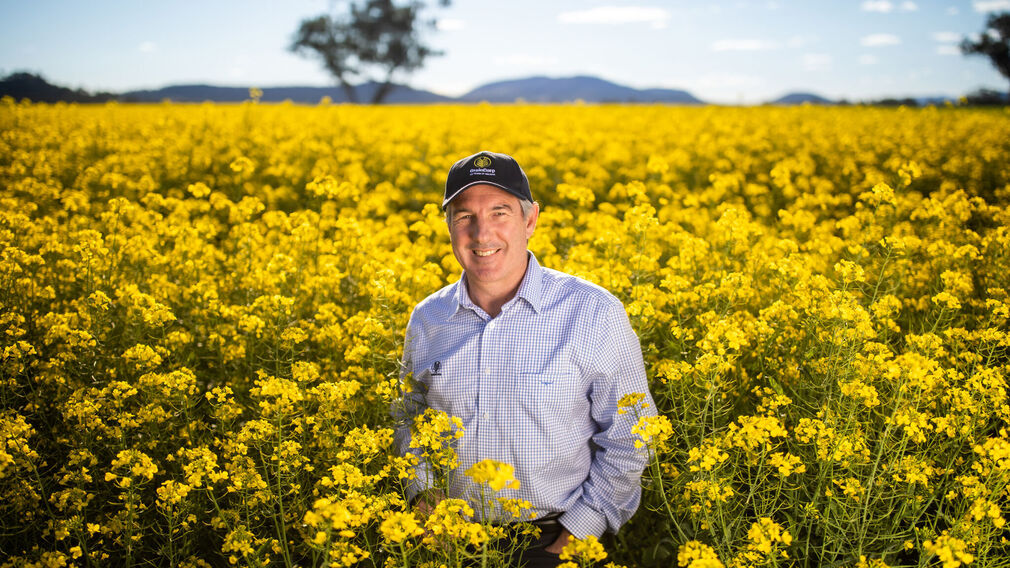
Leading Australian agribusiness and processing company GrainCorp has published a new white paper setting out a pathway for Australia’s sustainable aviation fuel (SAF) sector.
Published on 5 July, the ‘From Paddock to Plane: Feedstock White Paper’ outlined how existing agricultural and waste-based feedstocks could be used to build a globally competitive SAF industry in the country.
The publication came as the Federal Government prepared to consult on a demand-side measure to stimulate investment in refining capacity and at a critical time for the country’s energy resilience.
Heightened disruption in the Strait of Hormuz highlighted the nation’s reliance on imported liquid fuels, with around 90% of domestic fuel demand sourced from overseas and limited onshore aviation fuel reserves.
Developed as part of GrainCorp’s role on the Federal Government’s Jet Zero Council, the white paper said that Australia’s SAF opportunity was not held back by feedstock availability, but by the need for investment, policy settings and market signals.
“The findings challenge a common misconception: that Australia’s SAF opportunity is constrained by limited agricultural production. In fact, existing feedstocks – including canola, used cooking oil and other waste streams – could support SAF volumes equivalent to 117% of Australia’s projected jet fuel demand in 2030, without compromising food production,” said Robert Spurway GrainCorp managing director and CEO.
Canola oil offered scalable domestic SAF potential, underpinned by established agricultural supply chains, according to the report.
Used cooking oil (UCO) was also one of the most technically and economically viable feedstocks for producing SAF in the short‑to‑medium term, but scalability remained constrained by low domestic volume potential, the paper said.
Australian beef tallow also represented a credible early SAF pathway with strong carbon performance and existing infrastructure, but its long-term impact was constrained by limited volumes and competing end uses.
In addition, as Australia was currently exporting significant feedstock volumes, there was potential for domestic SAF redirection, the paper said.
“Today, Australian agriculture produces many of the essential raw materials, or ‘feedstocks,’ used in renewable fuel production, including canola, tallow and used cooking oil. Yet most of these feedstocks are exported overseas, processed elsewhere, and can be returned to Australia as higher‑value fuel products,” Spurway said.
“Canola alone tells the story. Now Australia’s second-largest export to Europe after coal, around 80% of the crop is exported and used in renewable fuel production overseas – enough to produce roughly 1.6bn litres annually.
The findings demonstrate Australia’s ability to secure its aviation future could begin immediately, according to Spurway.
However, long-term growth would require investment and R&D feedstock, the paper said.
GrainCorp stores, processes and facilitates the transportation of grains and edible oils across its global supply chain. The company also produces edible oils, biofuel components and animal feed, as well as oils and shortenings for the food production industry.