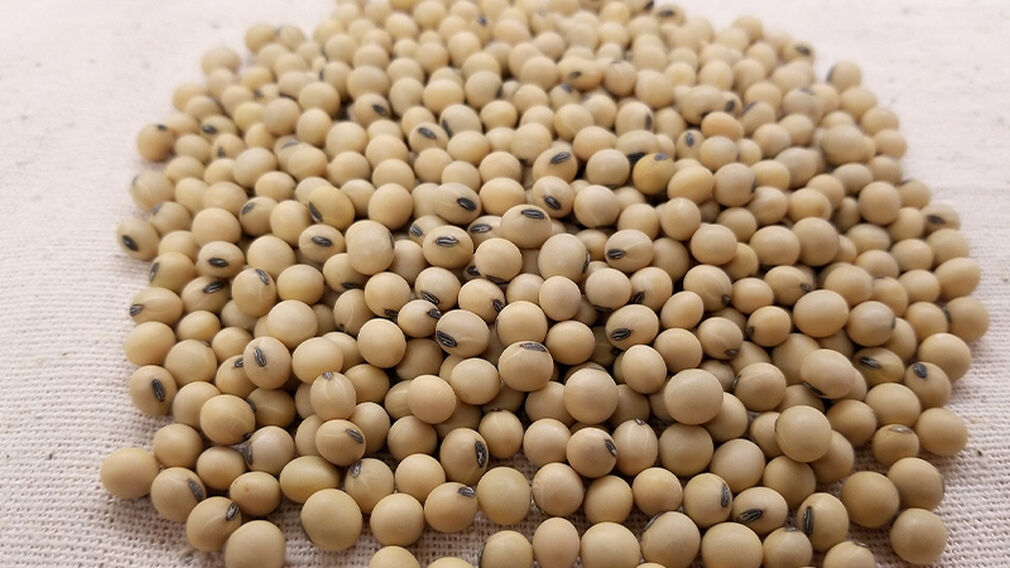
Total landing costs of delivering US and Brazilian soyabeans to China and Europe dropped year-on-year in the first quarter of 2025, partly due to lower transportation costs and falling soyabean prices, according to US Department of Agriculture (USDA) data reported by World Grain.
For US soyabeans to China via the Pacific Northwest, year-on-year landed costs – including transportation (truck, rail, barge, ocean) and farm value – were down 14.4% to US$456.01 (North Dakota) and down 14.2% to US$469.50 (South Dakota).
Via the Gulf, landed costs were down 13.7% to US$485.63 (Minnesota) and 13.8% to US$477.12 (Iowa), according to the USDA’s 29 May Grain Transportation Report (GTR).
For Brazilian soyabeans to China, landed costs dropped 8.2% to US$436.90 (Santos) and 7% to US$412.81 (Paranaguá).
Landed costs for US soyabeans to Europe via the Gulf dropped by 13% year-on-year to US$463.59 (Minnesota) and 13.2% to US$455.08 (Iowa).
For Brazilian soyabeans to Europe, landed costs fell 8.2% to US$434.80 (Santos) and 7.1% to US$408.91 (Paranaguá).
In the USA, for shipments to China, lower landed costs were due to falling transportation costs and farm values, while the drop in European shipment costs were mainly due to falling farm values, according to the GTR.
In Brazil, landed cost decreases were mainly due to falling transportation costs and lower soyabean farm values, World Grain wrote on 30 May.
Landed costs for all US routes increased in the first quarter compared to the same period the previous year, except for Pacific Northwest to China routes, which remained almost unchanged.
For shipments out of the USA, landed cost increases were due to rising transportation costs and farm values. In the first quarter of 2025, transportation’s share of US landed costs was 23%-26% for shipments to China and 20%-23% for shipments to Europe.
In Brazil, landed costs fell due to lower farm values. Transportation’s share of Brazil’s total landed costs was 21%-27% for shipments to China and 21%-27% for shipments to Europe.
As the world’s leading soyabean producers, the USA and Brazil compete for the same overseas markets, so low transportation and landed costs are key to staying competitive on the global market, according to the USDA.