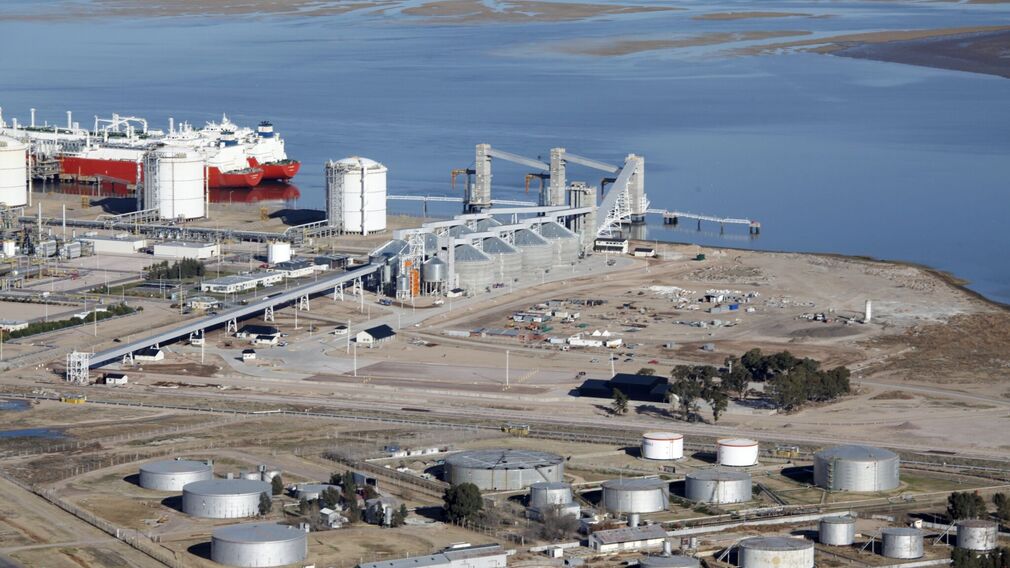
Global agribusiness giant Louis Dreyfus Company (LDC) has announced plans to build a new sunflowerseed and soyabean processing plant at the site of its existing facility in Bahía Blanca, Argentina.
The investment would expand the company’s industrial network in the country – reinforcing oilseed processing capabilities in one of Argentina’s most prominent sunflower production regions – to address growing global demand for vegetable oils in food and biofuels applications, LDC said on 8 June.
“This investment reflects Argentina’s role as a strategic market for LDC, combining a strong agricultural production base with industrial, logistics and export capabilities to connect local production with global markets,” said Michael Gelchie, LDC’s Group CEO.
“Representing one of the company’s largest investments in Argentina over the past decade, and its first greenfield development in that time, the expansion of our capabilities in Bahía Blanca reflects our long-term commitment to supporting the country’s agro-industrial development, including through investments that strengthen export competitiveness in Argentina and the region.”
Construction was expected to begin by the end of 2026 and on completion, the new facility – expected to be one of the world’s largest sunflower crushing plants – would have a crushing capacity of up to 4,000 tonnes/day of sunflowerseeds or soyabeans, the company said.
“With this new development … we underline our long-term commitment to a region that is crucial to the growth of our global sunflower business,” said Juan José Blanchard, LDC’s Group chief operating officer and head of Latin America.
The investment included the installation of equipment specifically designed for efficient oilseeds processing, including preparation systems for cleaning, dehulling, conditioning and flaking, as well as high-capacity presses and high-efficiency solvent extraction technology.
In addition, the plant – located in Buenos Aires province – would also feature an integrated area for seed reception and loading of processing by-products (meals, pellets and oils), as well as enclosed product conveyor systems designed for continuous operation and enhanced emissions control.
To optimise energy usage and reducing operational carbon emissions, the plant would also include advanced automation and integrated material handling systems, as well as thermal energy infrastructure based fully on renewable biomass (sunflower husks).