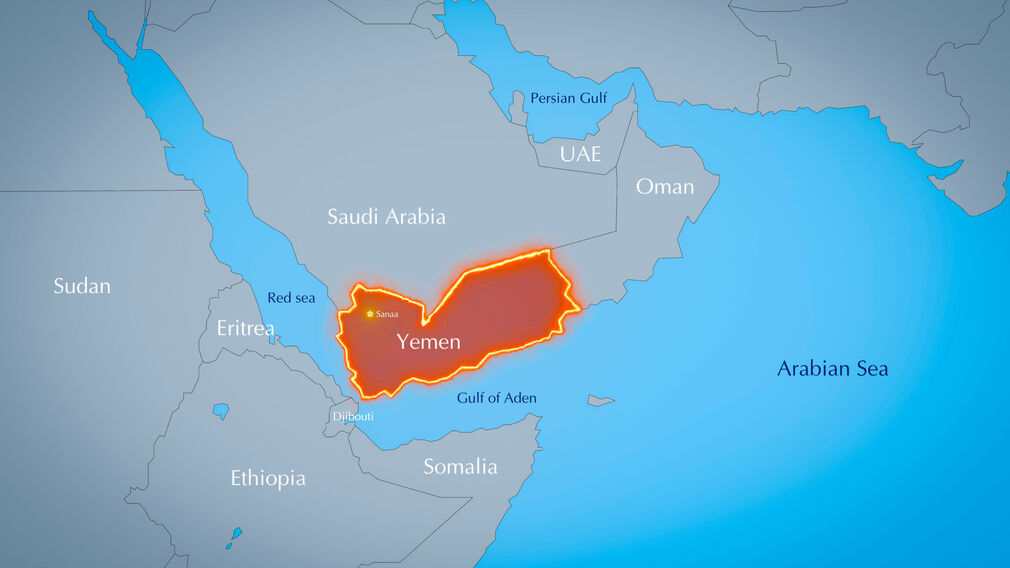
Officials from Egypt and major shipping lines have met to discuss a return of global shipping to the Suez Canal trade route – a key waterway connecting Asia with Europe, the Mediterranean and North America – which has been impacted by attacks by Yemen’s Houthi rebels, according to a 10 November FreightWaves report.
The Iran-backed Houthis, a rebel militia that controls about 40% of Yemen, began attacking merchant ships they claimed were linked to Israel and Israel-supporting countries in the Red Sea-Suez Canal route shortly after the terrorist attacks by Hamas on Israel on 6 October 2023.
The attacks had reshaped the global supply chain as major container and crude oil tanker lines connecting Asia, Europe, the Mediterranean and USA had diverted away from the region, taking longer voyages around the Horn of Africa, the report said.
Following a ceasefire between Israel and Hamas, the Houthi rebels said they would end attacks in the area.
Ossama Rabiee, chairman of Egypt’s Suez Canal Authority (SCA), met with representatives of 20 shipping lines and agencies to discuss developments in the Red Sea and their impact on global trade transiting through the canal and the maritime transport market, FreightWaves reported on 10 November.
Held at the SCA’s headquarters, the summit – also attended by several members of the agency’s board of directors – was the latest in a series of periodic meetings held by the agency to consult on sailing plans and schedules, the report said.
Egypt is looking to recover from severe double-digit declines in canal toll revenues following the Houthi attacks, according to the report.
Toll revenues plunged as much as 60% in 2024 to US$4.2bn-US$4.25bn after a record US$10.25bn the previous year. Revenue improved in the first quarter of this year to US$899M, a gain of more than 16% from the same period the previous year.
In May, the SCA started offering a 15% discount on tolls for large container ships in a bid to encourage major carriers to return to the route, the report said.
While ocean lines saw an initial windfall of billions of dollars from the diverted voyages in 2024, the recent upheaval in world trade and on-off tariffs by the USA has weakened demand amid an uncertain outlook and hit carrier profits, according to the report.
Meanwhile, Suez Canal traffic had improved, with July-October vessel transits totalling 4,405 vessels with total shipments of 185M tonnes, compared to 4,332 vessels and 167.6M tonnes the previous year, FreightWaves wrote.
In a press release, Rabiee was quoted as saying the October Gaza ceasefire talks had helped calm tensions.
October saw the return of 229 vessels to the canal, the highest monthly rate of return since the beginning of the crisis, the report said.
On 7 November, the waterway hosted CMA CGM’s 17,859-TEU Benjamin Franklin – the largest such vessel to navigate the passage in two years and the CMA CGM’s Zheng He, of similar size, had also made a recent transit, FreightWaves wrote.
The French company has been one of the few global carriers to maintain scheduled services through the Red Sea during hostilities, according to the report.
At the summit Tariq Zaghloul, chief executive of CMA CGM’s Egypt business, was quoted as saying there was no alternative to the Suez Canal, and he anticipated an increase in the group’s voyages in the coming quarter, due to the company’s expansion plans and anticipated increased volume through the construction of new vessels.
Rabiee urged shipping agencies to reassure carriers and encourage them to resume transiting the Suez Canal.
The SCA said that Mediterranean Shipping Co (MSC), the world’s largest container carrier, had told the summit it anticipated a swift return of southbound vessels, due to the improved stability in the region.
However, in an email to FreightWaves, a spokesman for MSC said: “The situation in the Suez Canal remains fluid and the security situation is unclear. In order to guarantee the safety of our seafarers and to ensure consistency and predictability of service for our customers, MSC will continue to transit via the Cape of Good Hope until further notice.”
Speaking at the summit, Ehab El-Bannan, chairman of British shipbroker Clarkson, said the authority should consider offering incentives linked to the number and tonnage of vessels to boost transits.
Robert Uggla, chairman of AP Moller-Maersk, parent company of the world’s second-largest shipping line, met with Egyptian President Abdel Fattah El-Sisi in October to reaffirm the company’s investment in that country, the report said.
Taiwan’s Evergreen said it was ready to resume transits as soon as the situation in the region stabilised “completely and permanently”.
Cosco representative Hani Al-Salami said structural changes in the international maritime community – including falling rates and a shift in supply and demand – would promote the return of shipping lines to the Suez Canal.
“Transits may start to increase if there is a perceived lower risk, but we are unlikely to see an imminent return to 2023 levels,” Peter Sand, chief analyst at shipping data platform Xeneta, was quoted as saying in a 12 November FreightWaves report.
According to Xeneta estimates, the longer routes around Africa currently absorb around 2M 20ft equivalent units (TEUs) of global container shipping capacity, increasing transport demands on the world fleet.
“Carriers now face a dilemma: Follow and accept the remaining security risks or stay around the Cape and risk losing market share,” wrote Luuk de Gruijter, senior investments manager for APM Terminals, in a LinkedIn post.
“If more carriers follow and the Red Sea fully reopens, capacity on the Asia-Europe trade will likely surge and freight rates could drop. Insurers will also be watching closely, with premiums staying elevated until multiple safe transits confirm stability.”