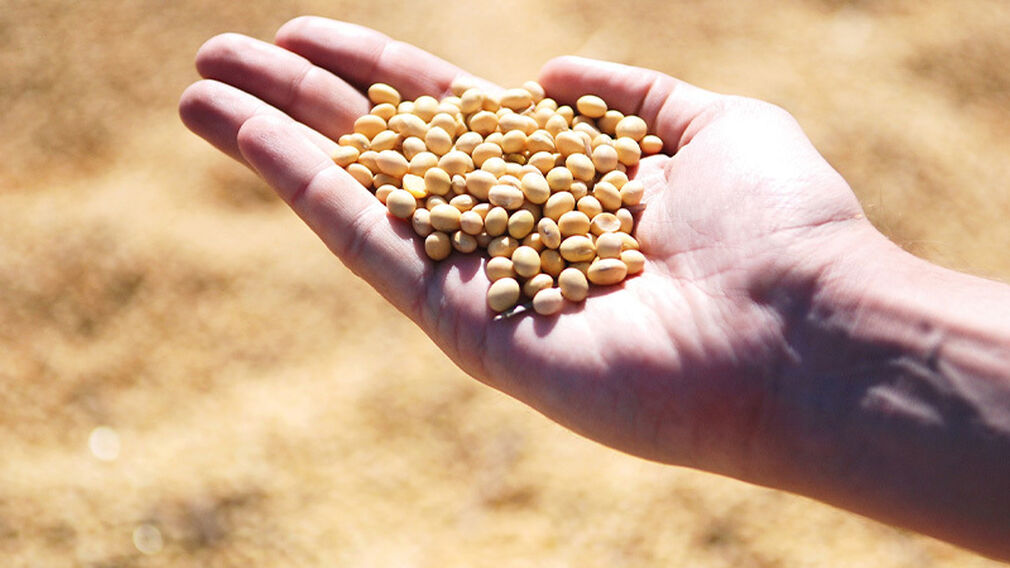
Argentine agribusiness Molinos Agro is working in alliance with local agricultural technology company Ucrop to measure the Scope 3 carbon footprint of its soyabeans, according to an Ecobiz report.
Part of an ongoing partnership between the two companies, the programme would trace soyabeans from planting to harvest and then calculate their environmental footprint under international standards, to obtain certification from the Global Feed LCA Institute (GFLI), the 25 March report said.
The carbon footprint would be measured via Ucrop’s blockchain and on-farm digital verification platform using methodologies approved by the GHG Protocol (Greenhouse Gas Protocol), the most widely used standard worldwide for emissions accounting.
“Sustainability is no longer an option, but a condition of access to international markets,” Federico Ucke, sustainability manager at Molinos Agro, was quoted as saying.
“With this programme, we not only measure carbon, but we also validate the efficiency of the Argentine producer with data. By moving towards GFLI certification, we give our soyabeans a true environmental passport.”
The “environmental passport” would provide verifiable information on the origin and impact of each tonne traced, Ecobiz wrote.
“This alliance … allows us to scale sustainability with hard data. It is no longer enough to say that we produce well: today we have the technology to prove it batch by batch, with full traceability and verifiable metrics from the field to the product grown and beyond,” Ucke added.
Formed in 2016 after a spin-off of the two major business divisions of Molinos Río de la Plata, Molinos Agro is one of Argentina’s leading soyabean processors with a milling capacity of 6M tonnes/year.
The company specialises in the industrialisation and marketing of bulk agricultural products, mainly derived from soyabean and sunflower milling, and cereals such as corn and wheat.
According to the company’s website, more than 90% of the company’s annual volume is exported international markets, reaching almost 50 destinations. The remainder supplies the local market, for use in the animal feed sector and in the supply of soyabean oil for the production of biodiesel.
To date, Ucrop has monitored more than 30M ha of agricultural land in 16 countries, according to the report.