


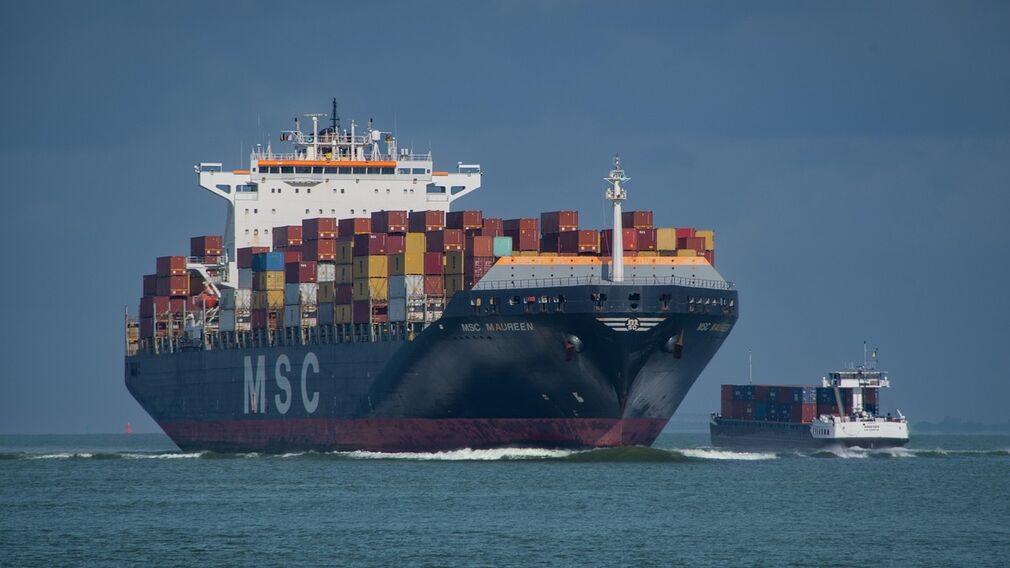
Leading container shipping line Mediterranean Shipping Company (MSC) has launched a new Europe-to-Gulf multi-modal route via Saudi Arabia to bypass the blocked Strait of Hormuz, Logistics Middle East reported.
The service combined ocean freight, inland road transport and feeder shipping, the 4 May report said.
Vessels sailing from Europe would call at Jeddah Islamic Port and King Abdullah Port in Rabigh on the Red Sea, before cargo was moved by truck across the Kingdom to King Abdulaziz Port in Dammam for onward distribution to Arabian Gulf ports, Logistics Middle East wrote.
The new route added a land bridge element to MSC’s regional network, using Saudi Arabia’s position between the Red Sea and the Gulf to support cargo flows into key Middle Eastern markets.
MSC was using the service to link European export centres with Gulf destinations through a single sea-land corridor, the report said.
According to the Saudi Press Agency, the service connects Jeddah Islamic Port with several major global ports, including Gdańsk, Bremerhaven, Antwerp, València, Barcelona and Gioia Tauro.
The route could handle up to 16,000 standard containers, providing shippers with substantial capacity between Europe and Saudi Arabia’s western coast, the report said.
MSC launched the new as cargo owners continued to assess resilience, transit times and risk across major trade lanes, Logistics Middle East wrote.
By combining Red Sea port access with cross-country trucking and Gulf feeder connections, the service offered an additional option for importers and exporters seeking more routing flexibility between Europe and the Gulf, the report said.
The launch also supported Saudi Arabia’s National Transport and Logistics Strategy, which aimed to position the Kingdom as a global logistics hub connecting three continents.
Against this backdrop, maritime cyber solutions company Cydome has advised ship managers with assets transiting high-risk waters, such as the Strait of Hormuz, that disabling a vessel’s Automatic Identification System (AIS) created a false sense of security, as the vessel’s location and position could remain electronically visible.
According to a recently published Cydome research paper, turning off AIS could increase the risk of attack.
The advisory followed a surge in reported AIS blackouts across the Persian Gulf, including the Strait of Hormuz, amid growing concern around so-called “zombie ships” that appeared to vanish from tracking systems.
“The reality is that these ships and their locations remain exposed in many cases and potentially vulnerable through other connected gateways,” Cydome said in the 27 April report.
“This research addresses a widening gap between traditional maritime security tactics and modern digital realities.”
According to Cydome’s cyber research team, relying on AIS deactivation without hardening satellite gateways, particularly in high-tension corridors like the Strait of Hormuz, could leave a vessel “blindly exposed”.
“The crew believes they are hidden, while threat actors can still track and target the ship via its VSAT signature.”
The Cydome security briefing pointed to AIS gaps lasting days as operators turned off transponders to protect their vessels and crews, but “deactivation did not cloak a vessel’s position”, the company said.
Cydome CEO and co-founder Nir Ayalon said the technical challenge for today's fleet is that a vessel is never truly “off the grid”.
“While deactivating tracking is a recognised safety measure in high-risk zones, it does not silence the ship’s broader digital footprint, which could also disclose its location.
“Many ship operators are not aware that the location remains publicly visible through the VSAT satellite communications devices which, unlike AIS, maintain continuous, internet-connected links between ship and shore.”
Cydome cyber experts were able to confirm that maritime VSAT infrastructure operating around the Hormuz Strait was extensively exposed, with management interfaces openly accessible from the internet, using default configurations, placing the ship’s location at risk of discovery.
