Swiss conglomerate Nestlé has developed a new process to increase cocoa yields amid a global crisis in the chocolate industry.
Cocoa futures prices peaked above US$12,000/tonne in December 2024 - more than quadruple the levels seen in previous years – due to poor weather and disease in West Africa, speculation in the cocoa futures markets, with global warming also posing a threat to cocoa supply, according to the IG online trading platform.
Cocoa butter prices also peaked in December 2024 at $14,300/tonne, a 137% surge compared to US$6,044/tonne the previous year, a Claight Corporation 28 July market report said.
The April IG report said West Africa - particularly Ivory Coast and Ghana - accounted for around 60% of global cocoa production and these regions faced droughts and erratic rainfall last year, hitting yields and exacerbating the spread of diseases like the cacao swollen shoot virus (CSSV). Smuggling and underinvestment in aging plantations further reduced output, while hedge funds and other investors engaged in aggressive trading, contributing to price volatility, the report said. While cocoa prices had fallen close to 30% from their peak, they remained significantly elevated.
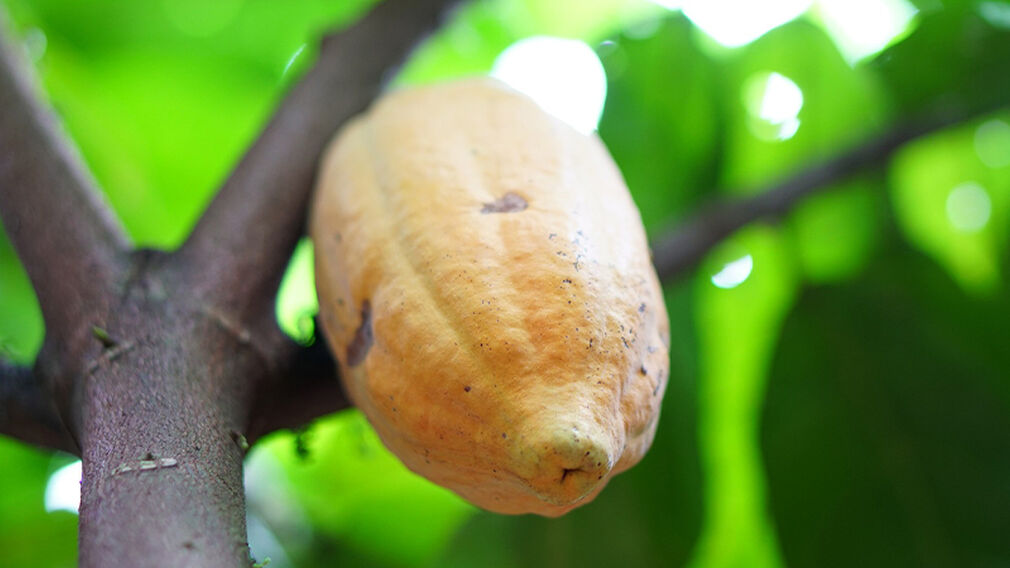
Against this background, Nestlé announced on 20 August that it had patented a new technique that utilised up to 30% more cocoa fruit by processing previously unused cocoa pulp, placenta and pod husk, as well as the traditional cocoa beans.
“In this method, everything inside the pod is collected as a wet mass, which ferments naturally, unlocking the key chocolate flavour. The mass is then ground, roasted and dried into chocolate flakes which can be used to make chocolate.”
“While this project is still at a pilot stage, we are currently exploring how to apply this innovation at a larger scale,” said Louise Barrett, head of the Nestlé R&D centre for confectionery.
With soaring cocoa butter prices surging, some companies, including McVities and Nestlé, had also been redeveloping some of their white chocolate brands, Food Navigator wrote on 20 August.
For example, in a reformulation of the McVities’ white chocolate digestives in March, all cocoa butter was removed from the recipe and replaced with palm, shea and sal oils.
As UK legislation required chocolate to contain a minimum of 20% cocoa butter, McVities’ owner Pladis had updated the packaging design to remove the word “chocolate”, the report said.
Changes to the recipe for Nestlé’s Kit Kat Chunky White also meant the company had updated its packaging to remove the word.
Although Nestlé’s Kit Kat Chunky White contained cocoa-derived ingredients, such as fat-reduced cocoa powder, cocoa butter and cocoa mass, palm and shea fats – which constituted a higher percentage of the overall recipe – were used to make the white coating.
Updating the product description in January meant the manufacturers was “accurate and compliant with how we describe the ingredient, which is made with vegetable fats rather than cocoa butter”, a Nestlé spokesperson told The Grocer.