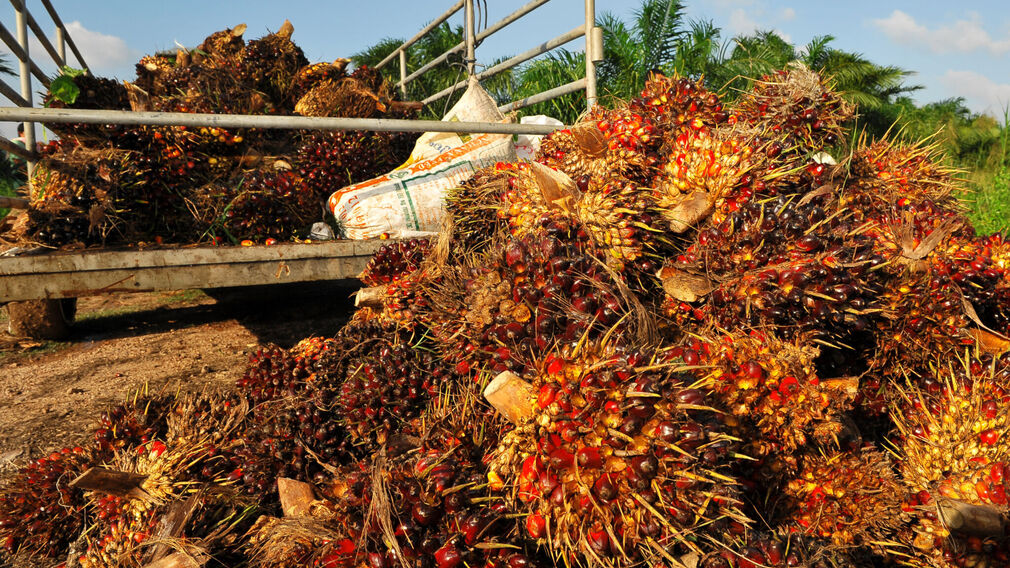
A new report by international civil society organisation Solidaridad recommends the development of palm oil procurement policies and the adoption of fair-trading practices to support smallholders.
Around 7M independent smallholder farmers produce 25-30% of the world’s palm oil on 27% of the total planted area, according to Solidaridad.
Although oil palm cultivation can provide farmers with a steady income and has the potential to help farming families emerge from poverty within a single generation, that value is inequitably distributed throughout the supply chain, according to the organisation’s Palm Oil Barometer Report 2025: Procurement for Prosperity.
As a result, smallholders faced difficulties producing sustainably and struggled to invest in practices that supported resilience in the face of climate change, the organisation said on 7 May.
For smallholder farmers in Asia and Africa, incomes are subject to volatile prices and extreme weather conditions exacerbated by climate change, according to the report.
“Governments and industry, in collaboration with sustainability certification platforms, need to adopt a new business model for engagement, organisational development and capacity buildin, that supports improved access to inputs and markets for independent smallholder farmers,” M R Chandran, chairman at IRGA.AG and advisor to the Roundtable on Sustainable Palm Oil (RSPO), said.
According to the organisation, most palm oil companies fail to pay prices that enable suppliers to produce sustainably, with fair pricing rarely incorporated into sustainable procurement strategies.
“Simply demanding sustainable production is insufficient. Companies need to commit to an inclusive value chain that recognises and integrates independent smallholder farmer perspectives and voices, and enables sustainable production by paying fair prices that make a living income possible,” Solidaridad Europe senior policy advisor Marieke Leegwater said.
“As new regulations, like the EUDR [EU Deforestation Regulation], come into effect, we need a balanced approach that addresses deforestation by large-scale plantations, while ensuring human rights and smallholder inclusion to create a stable supply chain with reduced risk.”
The 2025 Palm Oil Barometer proposes a transition from current sourcing practices to a “Procurement for Prosperity” approach, which would involve moving beyond sustainability certifications to ensure that palm oil procurement has a positive impact on suppliers, particularly independent smallholders, based on fairer trading practices and genuine partnership.
The report outlines four core principles for Procurement for Prosperity:
- Policy: Companies integrate procurement practices that recognise independent smallholders in their overall strategy and decision-making processes.
- Pricing and payment terms: Fair pricing and payment terms must recognise and reward sustainable practices. This includes understanding farmers’ living income gaps and working to close them.
- Partnerships: Partnerships and collaboration across the supply chain need to incorporate farmers’ perspectives and include them in decision-making processes, including the development of pricing mechanisms.
- Programmes: Downstream companies need to support suppliers by investing in organisational strengthening, technical capabilities and access to finance.
Solidaridad, a civil society organisation advocating for sustainable and inclusive value chains, said it supported smallholders in adopting more sustainable oil palm cultivation and trade practices.