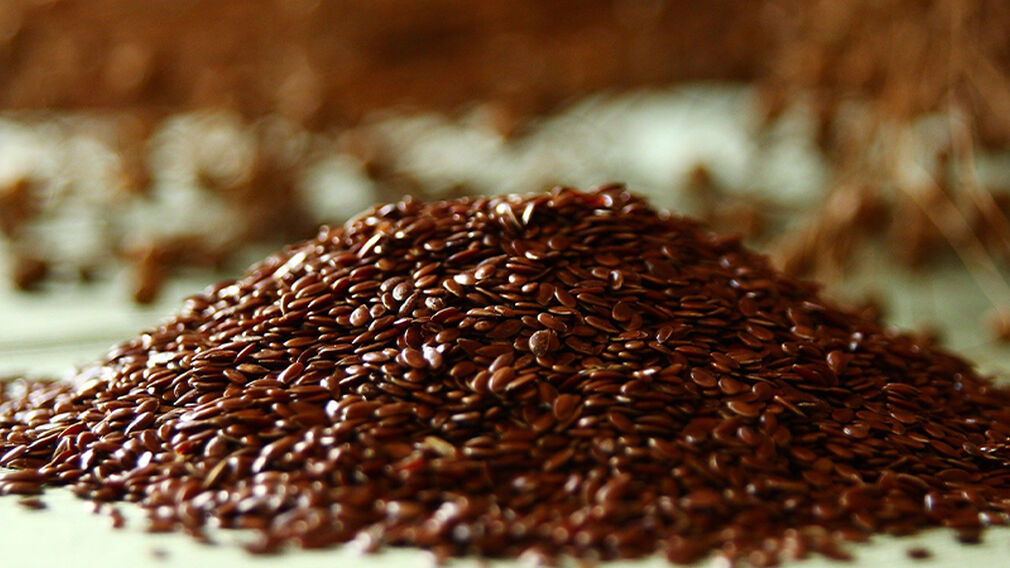
The longstanding sampling and testing protocol for Canadian flaxseed exports to the European Union (EU) officially ended on 1 May, Agriculture and Agri-Food Canada (AAFC) announced.
Removal of the non-tariff barrier – in place since 2009 – was a recognition of the safety, reliability and quality of Canadian agricultural and agri-food exports, the AAFC said in a 24 April statement on its website.
“This demonstrates the strength of the Canada-EU Strategic Partnership and a shared commitment to resolving long-standing trade irritants through cooperation and dialogue,” the statement said.
The protocol was put in place after the detection of trace amounts of an unauthorised genetically modified (GM) flaxseed called CDC Triffid in a Europe-bound shipment in July 2009, leading to the immediate and temporary cessation of flaxseed exports.
The AAFC noted that when CDC Triffid was found in Canadian flaxseed shipments to the EU in July 2009, it was a case of regulatory compliance, not of food, feed or environmental safety.
Following the detection, the AAFC worked with the Canadian Grain Commission (CGC), industry partners and the EU to develop the protocol, allowing trade to continue.
“While the protocol enabled trade to resume, it has been imposing additional costs and administrative burdens on Canadian industry and has put them at a disadvantage relative to competitors,” the AAFC said.
After years of testing with no detections of CDC Triffid, Canada and the EU worked together to review the protocol.
Since June 2013, the CGC had maintained a dataset of all bin tests associated with flaxseed shipments to the EU and had not received a FP967-positive laboratory result for a bin sample in 13 years, the AAFC said.
Following the acceptance of Canada’s formal request for the discontinuation of the protocol, submitted in 2024, it would not be required as of 1 May.
“Increasing trade with our European partners means more opportunities for Canadian farmers and processors to grow their businesses, create good jobs and build up our economy,” said Heath MacDonald, minister of Agriculture and Agri-Food.
As one of the world’s largest producers and global exporters of flaxseed, Canada produced 454,461 tonnes of the oilseed in 2025 from a planted area of approximately 251,000ha, and exported US$229.7M of flaxseed, US$73.6M worth of it to the EU.
Canada’s overall global exports of agriculture and agri-food (excluding fish and seafood) was worth US$92.8bn in 2025. Of that, US$6.2bn was exported to EU states, which - at the time of the report - was Canada’s third leading market for the first time.