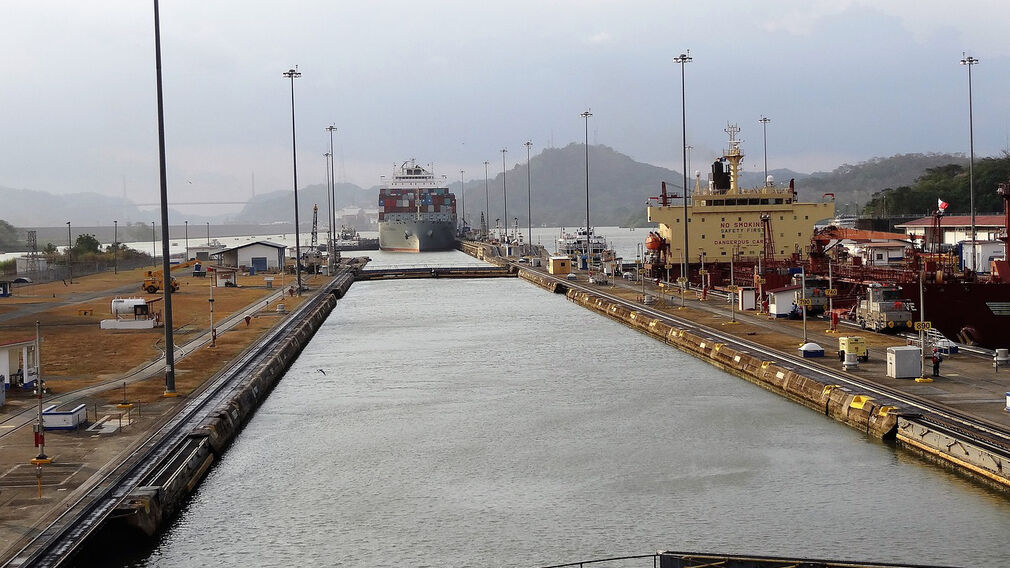
Panamanian President José Raúl Mulino has rejected claims made by US President-elect Donald Trump of Chinese interference at the Panama Canal, FreightWaves reported.
Mulino also dismissed Trump’s claims that US ships were being charged higher fees to use the vital waterway, the 27 December report said.
“The tolls are not set at the whim of the presidents [of Panama] and the administrator of the [canal]. They are set in a public and open process in which clients and other actors participate,” Mulino was quoted as saying at a news conference on 26 December.
Mulino’s remarks followed several posts by Trump on his Truth Social platform.
In a post on 25 December Trump said: “Merry Christmas to all, including to the wonderful soldiers of China, who are lovingly, but illegally, operating the Panama Canal. … The Panama Canal is considered a VITAL National Asset for the United States, due to its critical role to America’s Economy and National Security…
“It was likewise not given for Panama to charge the United States, its Navy, and corporations, doing business within our country, exorbitant prices and rates of passage.”
Trump’s post came a few days after a public speech in Phoenix, when he was quoted as saying “if shipping rates are not lowered, we will demand that the Panama Canal be returned to us, in full, quickly and without question.”
Built by the USA, the Panama Canal opened in 1914.
Connecting the Atlantic and Pacific oceans, the 82km (51-mile) waterway was administered by the USA until 1999, when control of the waterway was given solely over to Panama under a treaty signed by US President Jimmy Carter in 1977.
The Panama Canal connects 180 maritime routes that reach 1,920 ports in 170 countries around the world, through which around 3% of global maritime trade passes, according to the Panama Canal Authority (ACP).
Approximately 40% of US container traffic uses the canal annually, while the USA is also the largest user of the Panama Canal. This includes US grain and soyabean exports to Asia.
Vessels to and from the USA accounted for about 75% of traffic through the Panama Canal in the fiscal year ending in September, followed by China at 22%, Japan at 14% and Korea at 9%, the ACP said.
The high percentage of US vessels using the waterway underlined the canal’s importance in reducing transit times between the Pacific and Atlantic Oceans, FreightWaves wrote in an earlier report.
This dependency highlighted why any disruption or control shift could have profound implications for the US economy, particularly for industries reliant on timely and cost-effective shipping routes, the 22 December report said.
In the fiscal year ended September 2024, the Panama Canal’s net income increased by about 9.5% to US$3.45 bn, according to the ACP.
During the year, 9,944 ships transited the canal.
In 2023, the Panama Canal experienced its worst drought since 1950, which limited ship traffic through the waterway. The resulting delays caused shipping rates through the canal to reach record highs.
In a bid to reduce the impact of future droughts, the canal authority has proposed the US$1.6bn Rio Indio Reservoir project, which is still being planned by officials from the country.