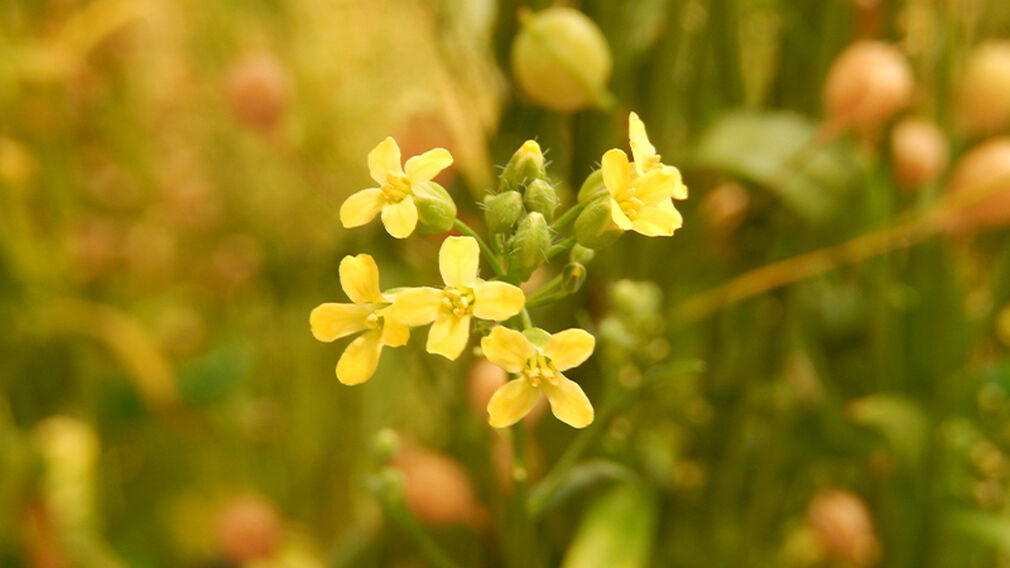
US agricultural bioscience company Yield10 Bioscience has been granted an exclusive technology licence from UK-based agricultural research institute Rothamsted Research to produce omega-3 products from camelina.
Since late 2020, Yield10 has been working in collaboration with Rothamsted supporting Rothamsted’s Flagship Program to develop omega-3 oils in camelina.
Yield10 said it was planning to use engineered camelina to commercially produce omega-3 oil and meal products for the aquafeed, pet food and nutritional markets for omega-3 fatty acids.
“Enabled by the Rothamsted technology, we are on a … path to commercialising … omega-3 producing varieties of camelina,” Yield10 Bioscience president and CEO Oliver Peoples said on 17 June.
“In 2024, we are positioned to … scale-up omega-3 producing camelina and to submit key regulatory filings with the goal of being ready for an initial commercial launch into the oil and meal markets. We also look forward to improving the current camelina varieties over time particularly with the deployment of herbicide tolerance and other performance traits.”
Harpenden-based Rothamsted Research is a leading non-profit research centre that focuses on strategic agricultural science.
Over the last decade, the team led by science director Prof Johnathan Napier has demonstrated the production of docosahexaenoic acid (DHA) and eicosapentaenoic acid (EPA) oils in camelina seed.
Woburn-headquartered Yield10, which has a Canadian subsidiary Yield10 Oilseeds, develops crop systems and uses its ‘Trait Factory’ and its camelina ‘Fast Field Testing’ system to develop seed traits for the agriculture and food industries.
The company is pursuing a partnering approach with major agricultural companies to drive new traits into development for canola, soyabean, corn and other crops.
Yield10 is also developing improved camelina varieties as a platform crop for the production and commercialisation of nutritional oils, proteins and polyhydroxyalkanoates (PHA) bioplastics.