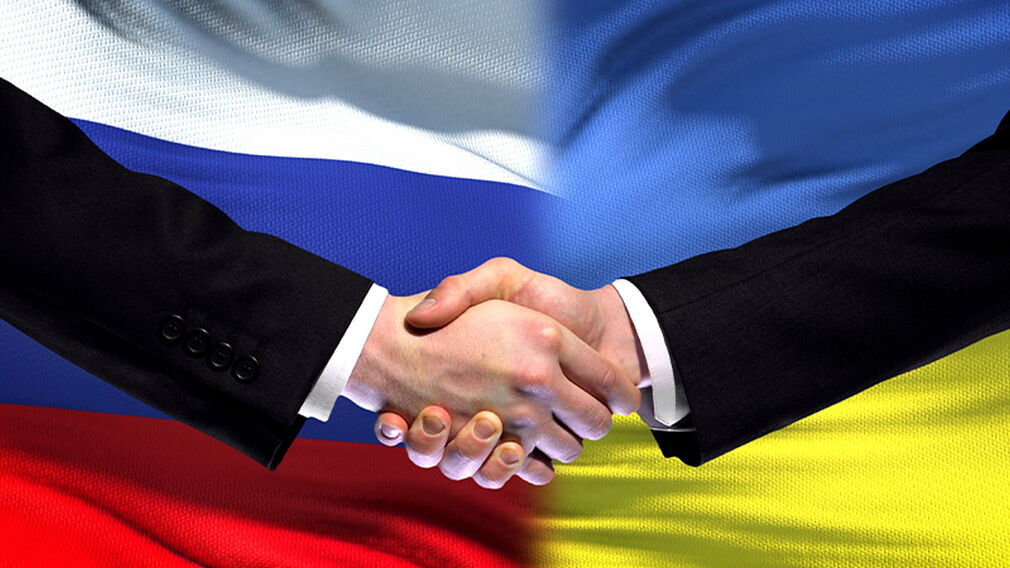
Russia and Ukraine have agreed to a ceasefire in the Black Sea in separate deals with the USA after three days of peace talks in Saudi Arabia, the BBC reported.
In statements announcing the agreements, the USA said all parties would continue working toward a “durable and lasting peace”, which would reopen an important trade route.
The two countries had also made a commitment to “develop measures” to implement a previously agreed ban on attacking each other’s energy infrastructure, the White House was quoted as saying in the 25 March report.
However, shortly after the agreements were announced, Russia said the naval ceasefire would only come into force after sanctions were lifted from Russian banks, producers and exporters involved in the international food and fertiliser trades, the BBC wrote.
The measures demanded by Russia include reconnecting the banks concerned to the SwiftPay international payment system and lifting restrictions on servicing Russian-flagged ships involved in the food trade, and on the supply of agricultural machinery and other goods needed for food production, according to the report.
Any return to the SwiftPay system would require European Union (EU) approval, a separate BBC report on the same day said.
Prior to the announcements, US officials held separate meetings with negotiators from Moscow and Kyiv in Riyadh with the aim of brokering a truce between the two sides. The Russian and Ukrainian delegations had not met directly, the report said.
Ukrainian President Volodymyr Zelensky was quoted as saying the deal to halt strikes in the Black Sea was a step in the right direction.
“It is too early to say that it will work, but these were the right meetings, the right decisions, the right steps,” he told a press conference in Kyiv.
Although it was not clear from the White House statement when the agreement would come into force, it did say the USA would “help restore Russia’s access to the world market for agricultural and fertiliser exports”, the BBC wrote.
Speaking in Kyiv, Zelensky was quoted as saying this was a “weakening of positions”.
He also said Ukraine would push for further sanctions on Russia and more military support from the USA if Moscow reneged on its commitments, the report said.
Ukraine’s Defence Minister Rustem Umerov was reported as saying “third countries” could oversee parts of the deal.
However, he warned that the movement of Russian warships beyond the “eastern part of the Black Sea” would be treated as a violation of the agreement and a “threat to the national security of Ukraine”.
“In this case Ukraine will have full right to exercise right to self-defence,” Umerov added.
The Black Sea ceasefire favoured Russia more than Ukraine, according to experts quoted in a 25 March report by The Kyiv Independent.
The experts quoted in the report said the agreement lacked crucial securities that Ukraine urgently needed, including protection of its ports from Russian attacks, as well as opening up the blockaded Mykolaiv port.
A previous arrangement allowing safe passage of commercial ships in the Black Sea was agreed in 2022, after Russia’s invasion of Ukraine in February that year.
The Black Sea Grain Initiative (BSGI) was put in place to allow cargo ships travelling to and from Ukraine to safely navigate without being attacked by Russia.
The deal facilitated the movement of grain, sunflower oil and other products required for food production, such as fertiliser, through the Black Sea.
It was initially in place for a period of 120 days but, after multiple extensions, Russia pulled out in July 2023, claiming key parts of the agreement had not been implemented, the report said.
Since the start of the invasion, Russia has damaged or destroyed 385 port infrastructure facilities, destabilising Ukraine’s port operations, according to The Kyiv Independent report.