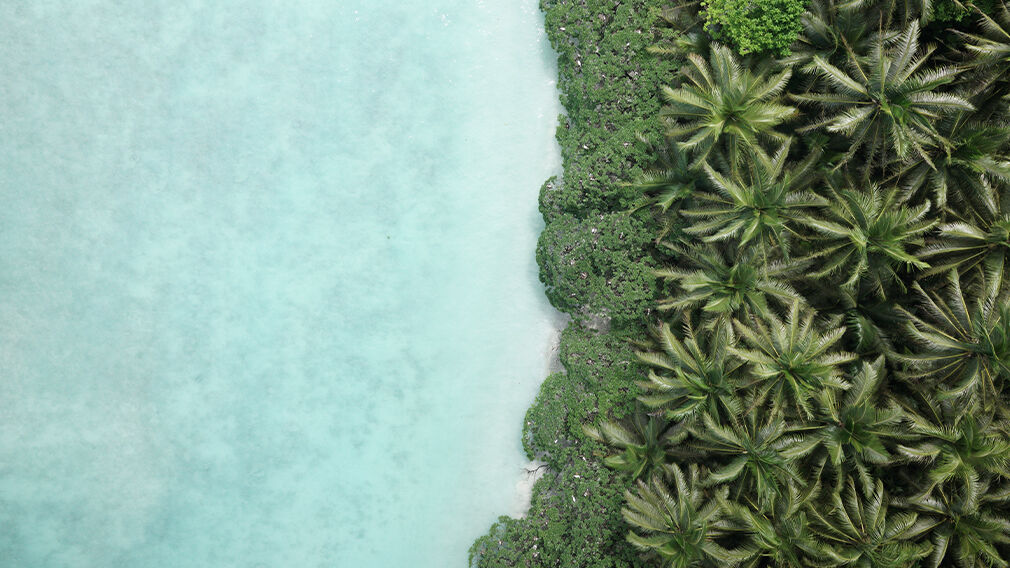
A new study shows coconut plantations have led to deforestation on more than 80% of Pacific atolls, with coconut palms covering over half of their forested areas, global conservation organisation The Nature Conservancy (TNC) writes.
Published in Environmental Research Letters, research from TNC and the University of California, Santa Barbara, (UC Santa Barbara) mapped the footprint of coconut palm agriculture across almost every Pacific atoll.
Over the last 200 years, this land cover change has profoundly altered ecosystems and hydrologic resources, potentially affecting atoll communities’ resilience to climate change and other environmental stressors, according to the 4 December TNC report.
“Coconut oil used to be essential to atoll economies, but today most coconut palm plantations are abandoned and overgrown,” lead author Michael Burnett of UC Santa Barbara said.
“With the growing climate threats facing Pacific atolls, it’s critical to figure out where these abandoned plantations are using up critical land and water resources, and where there may be opportunities to restore the native forests to the benefit of islands and islanders.”
At the time of the report, coconut palms represented over half of the tree covering in this region.
“[The] replacement of broadleaf forests with coconut monocrops has been linked to groundwater depletion, declining seabird populations and adverse impacts on adjacent coral reefs,” Burnett added.
“Understanding the present extent of coconut plantations is crucial for confronting sustainability challenges facing communities across the Pacific’s 266 atolls.”
The loss of unique ecosystems on Pacific atolls had exceeded the rate of deforestation due to oil palm production, at least in relative terms, in other parts of the world, TNC wrote.
In Borneo, for example, 10.8% of the land area had been converted to oil palm monocrops by 2015, while coconut palms covered 58.3% of the mapped atolls’ total forested area and 24.1% of their total land area at the time of the report.
However, the study pointed out that coconut palm plantations had untapped potential for ecosystem restoration, resource conservation and climate resilience.
The paper’s vegetation maps were a first step in helping Pacific atoll communities visualise the state of their forests and evaluate the potential best uses – for coconut production, broadleaf forest restoration or any other action, the authors said.
“Coconuts and coconut trees are deeply woven into the lives and livelihoods of Pacific peoples and communities, symbolising resilience and sustenance,” TNC Micronesia conservation director Elizabeth Terk said.
“Mapping the extent of copra plantations on atolls is a crucial step for informed decision-making - helping to provide a clearer picture of land use and enabling us to balance economic needs with ecological restoration and climate adaption efforts.”