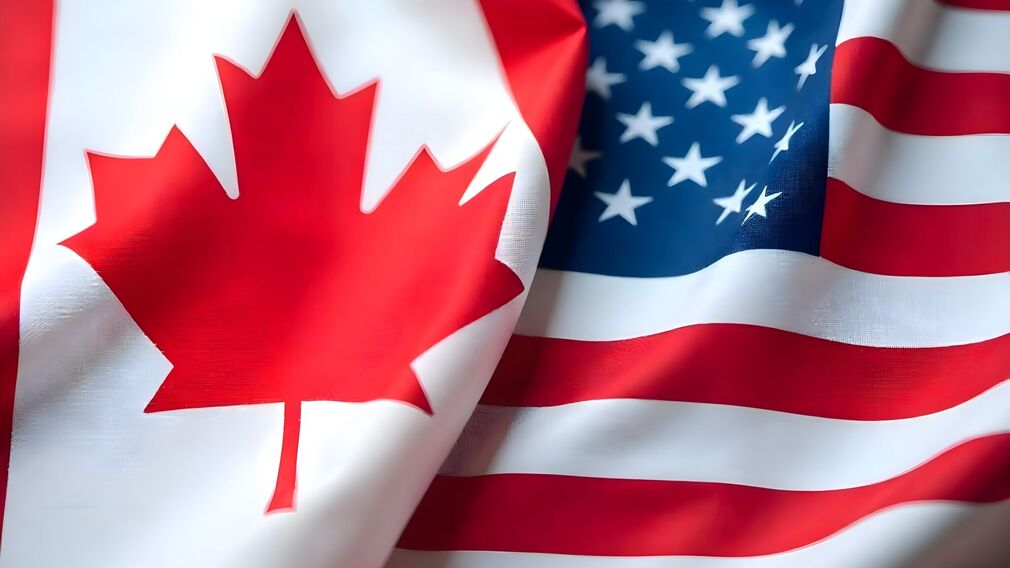
US President Donald Trump has cut off trade talks with Canada due to what he described as an "egregious tax" on tech companies, the BBC reported.
In his announcement on social media on 27 June, Trump also said he would announce new tariffs on goods crossing the border within the next week.
The two countries had been working to agree a trade deal by mid-July after Trump and Canadian Prime Minister Mark Carney set a 30-day deadline for a trade deal at the G7 summit in Alberta in mid-June.
At issue was Canada's 3% digital services tax, effective 30 June, which would cost US companies such as Amazon, Apple and Google an estimated US$2bn/year, BBC wrote.
Carney said talks would continue and be conducted “in the best interest of Canadians".
The USA is Canada's top trading partner, buying more than US$400bn in goods last year, the BBC report said. Trump hit that trade with a 25% tariff earlier this year, citing concerns about drug trafficking at the border. In April, Trump exempted some goods - such as Canada-US-Mexico Agreement (CUSMA) compliant products - including Canadian canola.
The USA is Canada’s top market for canola products, with the total export value of Canadian canola exports to the USA reaching CAN$7.7bn (US$5.63bn) in 2024 including 3.3M tonnes of canola oil and 3.8M tonnes of canola meal, according to the Canola Council of Canada.
In other news, China's Commerce Ministry announced on 27 June that Beijing and Washington had confirmed details of a trade deal framework that the two countries had agreed on earlier this month.
“China will approve the export applications of controlled items … The United States will cancel a series of restrictive measures taken against China accordingly,” CBS News quoted the ministry as saying.
No details about the agreement were provided by Trump, who had announced at a White House event on 26 June that “we just signed with China the other day”.
The announcement by the USA and China followed initial talks in Geneva in early May, which led both sides to postpone massive tariff hikes against each other, the 27 June CBS News report said. Later talks in London set a framework for negotiations, and the deal announced by Trump and the Chinese Commerce Ministry appeared to formalise that agreement, the report added.
US Treasury Secretary Scott Bessent also said on 27 June that China has agreed to remove its restrictions on exports of rare-earth metals, used in high-tech products such as computer chips and electric vehicle batteries, according to a FreightWaves report on the same day.
Bessent confirmed that US tariffs on Chinese imports were now at 30%, while China’s duty rate on US goods stood at 10%, with a 20% fentanyl levy on China also staying in place.