Germany’s Union for the Promotion of Plants and Protein (UFOP) has called on European Union (EU) agricultural ministers and the European Parliament to prevent soyabeans being classified as a raw material associated with a high risk of indirect land-use change (iLUC).
The debate over iLUC requires a differentiated and appropriate understanding of the factors that determine producer prices, according to UFOP.
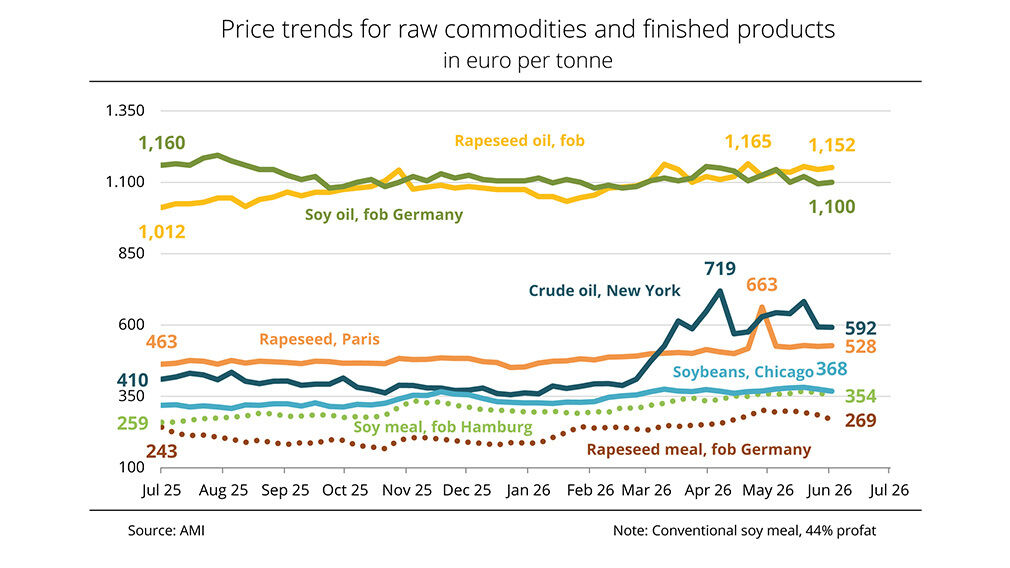
While in the case of rapeseed, trends in the vegetable oil markets influenced the pricing process and, consequently, farmers’ crop-choice decisions, the 80% protein content was the key factor in the pricing and cultivation of soyabean pricing and cultivation, the association said on 12 June.
For this reason, UFOP said it had underlined its objection to the proposed classification of soyabeans as a high-iLUC feedstock as soyabean oil was used in biofuel production and, consequently, counted towards EU member states’ quota obligations.
Calling on EU agricultural ministers and the Parliament to stop the European Commission (EC)’s draft to classify soyabeans as a high-iLUC feedstock, UFOP said a methodological review should be carried out.
“Soyabeans, peas and broad beans are the most important large-grained pulses in the EU and are gaining more and more importance as GM-free sources of protein, helping to extend crop rotations and contributing to security of supply,” UFOP said.
Against this backdrop, the association said it should be recognised that additional demand from the energy sector for soyabean oil would make a significant contribution to achieving those objectives.
“An expansion of soyabean production in the EU is both desirable and necessary,” UFOP added.