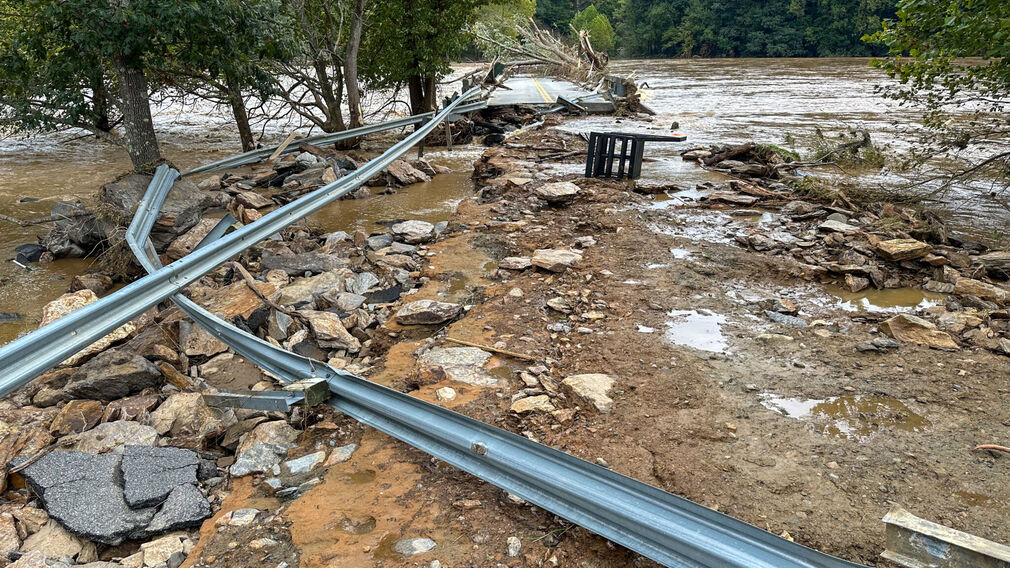
US farmers are reeling from the impact of Hurricane Helene on crops while Florida continues to assess the damage caused by Hurricane Milton, Fox5 reported.
Hurricane Milton, a category 3 storm, hit Florida on 9 October, causing extensive property damage and leaving millions of homes and businesses without power, The Guardian wrote on 10 November.
At the time of the report, the death toll from Hurricane Milton had reached at least 10.
Milton came just two weeks after Hurricane Helene slammed into Florida’s Gulf coast on 26 September - dumping unprecedented amounts of rain through Georgia, the Carolinas, Tennessee, Virginia and Kentucky - and killing at least 232 people, the report said.
Damage from the Category 4 Helene would cost billions of dollars to repair, US President Joe Biden was quoted as saying in a 7 October Agriculture Dive report.
The US Department of Agriculture (USDA) had deployed “surge teams” to assist with recovery efforts, to help with the billions of dollars in damages wreaked on US crops and farmland, the report said.
The severe flooding and high winds caused by Hurricane Helene had destroyed large portions of Georgia’s cotton, peanut and pecan crops, causing significant losses across the state, the 9 October Fox5 report said.
According to the Georgia Department of Agriculture, nearly 30% of the peanut crop has been destroyed and one-third of the state’s cotton crop is considered a total loss.
In North Carolina, damage from Hurricane Helene was expected to be “major”, said Andrea Ashby, director of public affairs for North Carolina Department of Agriculture and Consumer Services.
Some of the key commodities grown in affected parts of North Carolina included corn, soyabeans, tobacco, sweet potatoes, cotton, apples and tomatoes, she said.
“We don’t have any specific estimates on crop losses at this time because it is just too early in the process,” Ashby told Agriculture Dive.
Meanwhile, soyabean farmers in North Carolina are facing a range of issues, according to soyabean specialist at North Carolina State University Rachel Vann.
“There’s some lodging [and] there’s some flooded fields,” Vann was quoted as saying in a 4 October report by Brownfield Ag News.
“There’s some sprouting in pods and then seed quality declines from soyabean diseases.”
Helene was the third hurricane to hit the Florida Gulf area in just over a year, following Idalia and Debby, which together caused more than US$700M in losses to crops, livestock and agricultural infrastructure, Agriculture Drive said.
At the time of going to print, the extent of damage caused by Hurricane Milton was still being assessed.