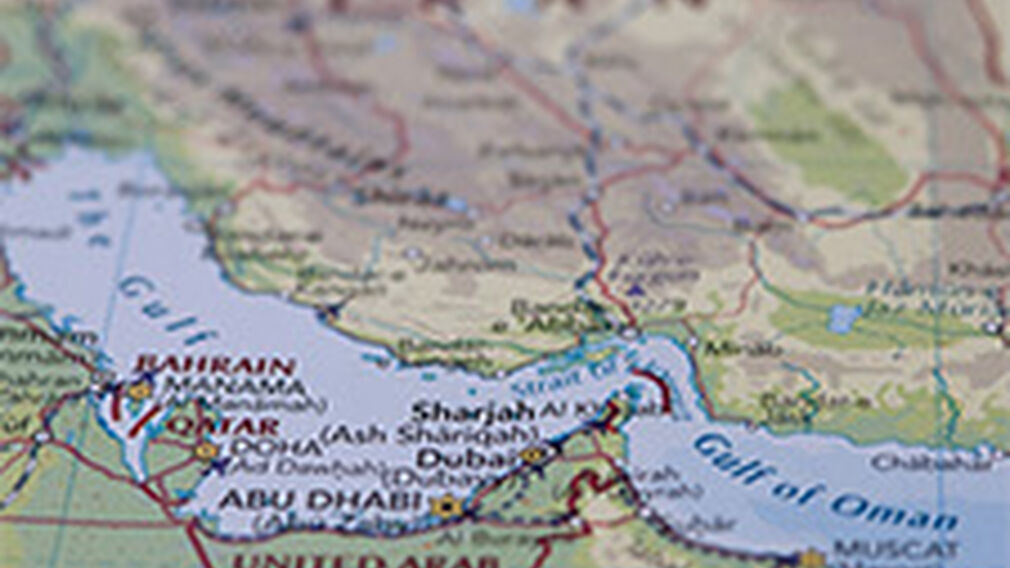
The ongoing Gulf conflict between the US and Israel against Iran has driven up crude oil prices and threatens to disrupt supply chains for commodities including soyabeans, corn and fertiliser.
Since US military strikes on Iran began on 28 February, Brent crude oil prices have reached as high as US$120/barrel against pre-conflict prices of US$67/barrel, due to the effective closure of the Strait of Hormuz, a route that normally carries about 20% of global oil trade.
An Islamic Revolutionary Guard Corps spokesperson said on 11 March that any vessel linked to the US, Israel or their allies would be targeted in the strait, the BBC reported the following day.
Three more cargo vessels were hit in the Gulf on 11 March and Brent crude oil was trading around US$96-100/barrel today despite the International Energy Agency releasing a record 400M barrels of oil yesterday to stabilise global oil markets.
Agriculture markets, led by edible oils, have also risen – as biofuels derived from agricultural feedstocks such as soyabeans and corn, have become more attractive, according to a 2 March InfoMoney report.
Soyabean oil prices rose by 3.9% to a two-and-a-half year high on 2 March, the report said.
It's kind of a perfect storm for soyabean oil, with rising oil prices increasing demand for biofuels,” Arlan Suderman, chief commodity economist at StoneX, was quoted by InfoMoney as saying.
Against the backdrop of surging crude oil prices, Indonesia could revive a plan to launch a mandatory B50 grade of palm oil-based biodiesel in the middle of this year, deputy energy minister Yuliot Tanjung was quoted as saying in a 9 March Reuters report.
“B50 might be implemented in the second semester or even earlier...But for now the steering committee’s decision for B40 until the end of 2026 still stands,” he added, saying that authorities were monitoring price movements in real time.
Malaysian commodity exports had not been significantly affected by the Middle East conflict to date, Plantation and Commodities Dr Noraini Ahmad was quoted as saying in a 10 March report by The Star.
However, Ahmad said other costs including transportation, logistics and insurance were expected to increase if the crisis continued.
“If the conflict continues, logistics costs are expected to increase and when ships pass through conflict areas, ship protection insurance premiums will also increase,” she told reporters.
Palm-oil based goods were among the commodities that could potentially be affected, Ahmad added.
The attack on Iran could also impact US relations with China, which had condemned the bombings, the report said.
With President Trump and Chinese President Xi Jinping scheduled to meet in Beijing at the end of March, it raised doubts if China – the world’s largest soyabean consumer – would continue to fulfil its agreement to purchase 12M tonnes of the commodity from the USA this season.
“If the war with Iran is still ongoing at the end of March, it will be politically difficult for Xi to receive Trump in Beijing,” AgResource Co said in a statement.
“Political ties between the USA and China are fraying, which, at the very least, will delay China’s purchases of US soyabeans – and may even disrupt them.”
With Iran being a major importer of soyabean meal, prices for this commodity had dropped by up to 2.7% - the biggest drop since November, InfoMoney wrote.
Prices were also under pressure “due to increased US production and rising freight tariffs, which could hurt future US soyabean meal exports,” according to AgResource.
“As long as crude oil remains supported by logistical bottlenecks and elevated risk premiums, the outlook for agricultural commodities retains a mildly bullish bias – particularly for soyabean oil, wheat and energy-linked derivatives,” Spanish vegetable oil company Lipsa wrote in a 6 March report.
Meanwhile, soyabean exporters in Brazil and the USA could see a dip in exports amid geopolitical tensions in the Middle East, according to traders in both countries quoted in a 2 March S&P Global report.
“The overall volume is very small. But a long-term war will impact some shipments over the next few weeks at least,” a trader based in the USA said.
According to data from Brazil’s Secretariat of Foreign Trade, Iran imported 1.4M tonnes of soyabeans from Brazil in 2025, a year-on-year drop of 25.3%, while the country also exported 675,091 tonnes of soyabean to Iraq, up 11.7% year-on-year.
Brazil also sold 581,478 tonnes of soyabean meal in 2025 to Iran, compared to 2.13M tonnes the previous year, according to the data. It also exported 53,615 tonnes of soyabean meal to Saudi Arabia, down 75.9% year-on-year and 48,571 tonnes to Iraq, down 6.9%.
According to US Department of Agriculture (USDA) data, the USA exported 144,000 tonnes of soyabeans to Saudi Arabia in 2024/25 compared to 181,900 tonnes the previous year.
The US also exported 140,000 tonnes of soyabeans to Iraq in 2024/25, compared to no exports the previous year.
At the time of the S&P Global report, 260,900 tonnes of Brazilian soyabeans were in transit to the United Arab Emirates (UAE) and Iraq, according to S&P Global Commodities at Sea.
According to S&P Global’s data analytics service Commodities at Sea (CAS), 22,100 tonnes of soyabeans from the USA were enroute to Saudi Arabia.
In addition, as the Gulf region was home to some of the world’s largest fertiliser factories, the conflict in Iran could also disrupt a major fertiliser production and shipping hub, The Guardian wrote on 5 March.
Closure of the Strait of Hormuz could impact the transport of ammonia and nitrogen, key ingredients in many synthetic fertiliser products, the report said.
Disruptions to fertiliser supplies could pose a cost risk to Malaysia’s plantation sector, Hong Leong Investment Bank (HLIB) was quoted as saying in a 6 March New Straits Times report.
HLIB said at least one-third of global fertiliser trade passes through the Strait of Hormuz, meaning any prolonged closure could drive prices higher and add pressure on plantation companies already facing rising production costs.
“The closure of the Strait of Hormuz, arising from recent Middle East tensions, could disrupt fertiliser supply and potentially drive prices higher if the situation persists,” the company said in a note.