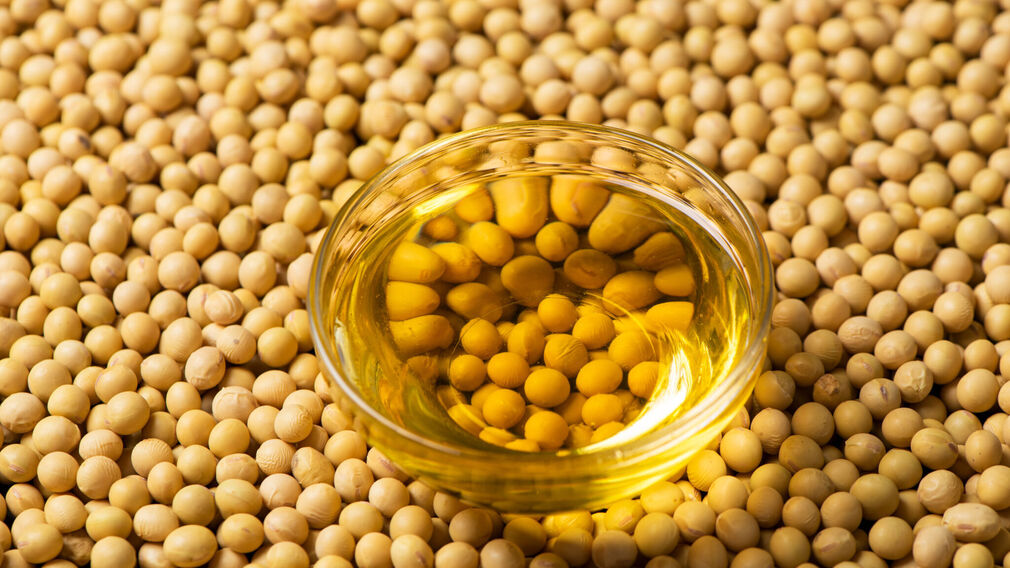
The volume of US soyabean oil used in biofuel production is forecast to increase by around 17% in 2026/27, according to a report by the US Department of Agriculture (USDA).
A rise in soyabean production and planted area was also expected, the USDA’s ‘Grains and Oilseed Outlook’ said.
A 5% increase in US soyabean supplies in 2026/27 is projected due to higher beginning stocks and production, according to the 19 February report.
Soyabean planted area was forecast to rise by around 4M acres (1.6Mha), reflecting stronger profitability compared to other crops, along with expected crop rotations across the Corn Belt and the Delta.
Assuming normal weather conditions, yields were expected to average 53 bushels/acre leading to an increase in production to 4.45bn bushels (121M tonnes).
US soyabean crushing was projected to rise by 85M bushels (2.31M tonnes), reaching 2.655bn bushels (72.26M tonnes), supported by increasing soyabean meal and oil demand.
The growth in domestic soyabean meal consumption was expected to be lower compared with the previous two years while exports were forecast to expand.
Given normal weather, oilseed meal supplies were expected to be ample in 2026/27, keeping soyabean meal prices relatively flat with the prior marketing year at US$300/short ton.
The growth of soyabean crushing had increased significantly over the past few years to meet growing demand for soyabean oil as a feedstock for biofuel, mainly driven by the US Environmental Protection Agency (EPA)’s Renewable Fuel Standard (RFS) renewable volume obligations (RVOs) and state-level mandates, the USDA said.
The Californian market has been a major destination for biofuel, with biomass-based diesel (BBD) rising from almost 25% of the state’s diesel fuel pool in 2020 to over 70% during the first three quarters of 2025, according to the report.
While the pace of growth in California was expected to slow down, the market would remain important to BBD demand, reinforced by other Low Carbon Fuel Standard (LCFS) states such as Washington and New Mexico, the USDA said.
The USDA’s forecast for soyabean oil used in biofuel was based on the EPA’s proposed Renewable Fuel Standard RVOs for 2026 and 2027, which were announced in June 2025.
A significant shift in the proposed RVOs compared to previous RFS regulations was the requirement that biofuels that had been either imported or produced domestically using foreign feedstocks would receive only half the renewable identification number (RIN) credits compared to biofuels produced within the USA using US-based feedstocks.
As a result, the use of soyabean oil in biofuel production in 2026/27 was expected to rise to 17.3bn pounds (7.8M tonnes), up 2.5bn pounds (1.1M tonnes) from the previous marketing year.
The USDA noted that if the final RVOs diverged from the June 2025 proposal, the forecast would need to be re-evaluated.
US soyabean exports for 2026/27 were projected at 1.7bn bushels, a recovery from the 2025/26 forecast of 1.58bn bushels (or 42.9M tonnes).
Exports for the 2025/26 marketing year were forecast to decline to the lowest level in 13 years, accounting for a record-low share of 23% of global soyabean trade.
“This reduction reflects tariff measures that curtailed shipments to China – the USA’s largest export destination – which imported an average 28.7M tonnes of US soyabeans during the 2021/22 through 2023/24 marketing years,” the USDA said.
In addition, Argentina’s temporary elimination of export taxes in September 2025 led to a counter-seasonal surge in exports in November, further impacting US market share globally.
Although US soyabean exports to China were virtually absent from June-November 2025, at the end of 2024/25 and the beginning of 2025/26, shipments to other markets surged to their highest levels since the same period in 2018, largely driven by lower US prices compared to Brazil due to pressure from Chinese tariffs on US products, the USDA said.
In late October 2025, the USA and China announced a trade agreement specifying that China would purchase a minimum of 25M tonnes/year of US soyabeans in 2026, 2027 and 2028 – restoring trade volumes closer to pre-2025/26 levels.
“At that time, US soyabean prices rose and the discount to Brazilian prices narrowed, reducing the earlier price advantage in non-Chinese markets,” the USDA said.
“Although US soyabean exports for 2026/27 are expected to increase compared to the previous year, up 125M bushels to 1.7bn bushels (46.2M tonnes), the share of US exports in the global market will likely continue its long-term downward trend due to larger South American supplies.”