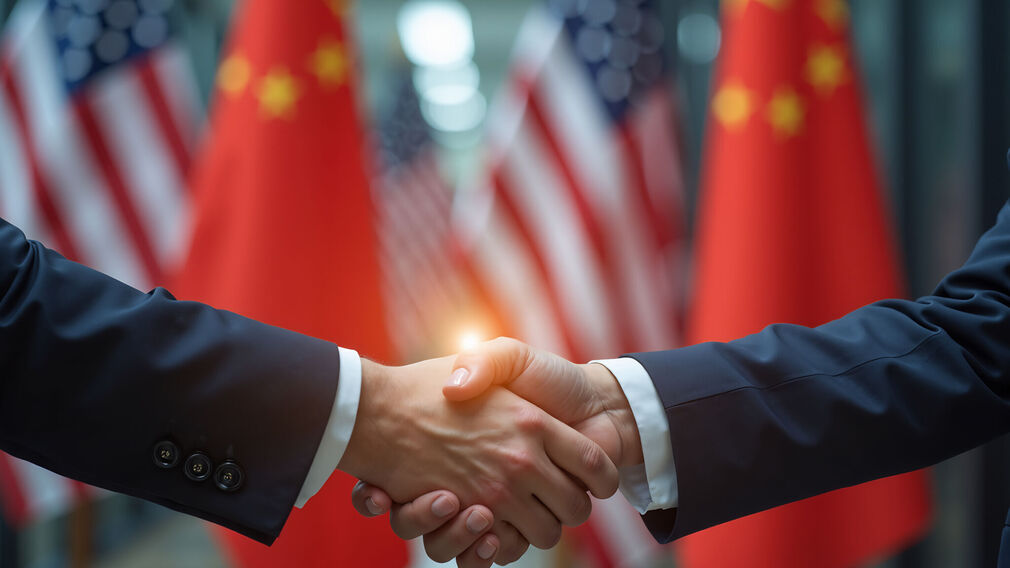
The USA and China have reached an agreement to cut tariffs on each other’s goods by 115% for 90 days in a major de-escalation of their trade war, the BBC reported.
Following the agreement, which took effect yesterday, US tariffs on Chinese imports fell to 30%, down from 145%, while Chinese tariffs on US goods dropped to 10%, down from 125%, the 12 May report said.
Announcing the agreement, US Treasury Secretary Scott Bessent was quoted as saying: “The consensus from both delegations this weekend is neither side wants a decoupling.
“What had occurred with these very high tariffs was the equivalent of an embargo, and neither side wants that. We do want trade, we want more balanced trade, and I think that both sides are committed to achieving that.”
China’s commerce ministry was quoted as saying the agreement with the USA was an important step to “resolve differences” and “lay the foundation to bridge differences and deepen co-operation”.
The breakthrough agreement came after both sides held trade talks – the first talks between the two countries since US President Donald Trump had levied steep tariffs on Chinese imports – in Geneva, Switzerland, the BBC wrote.
After the imposition of US tariffs on China and the latter’s introduction of retaliatory tariffs, financial markets had been impacted, sparking fears of a global recession, the report said.
According to the report, both countries will establish “a mechanism to continue discussions about economic and trade relations”, led by Bessent and China’s Vice Premier He Lifeng, with future talks held in China or the USA.
The US measures still included an extra component aimed at putting pressure on Beijing to do more to curb the illegal trade in fentanyl, a powerful opioid drug, the report said.
However, US officials were quoted as saying they had been welcomed the willingness of China to deal with the problem.
“Both countries represented their national interest very well,” Bessent said. “We both have an interest in balanced trade, the USA will continue moving towards that.”
The imposition of the tariffs had raised the prospect of a slump in trade between the two countries, with US ports reporting a sharp drop in the number of ships scheduled to arrive from China, the BBC wrote.
Meanwhile, Beijing had become increasingly concerned about the impact the tariffs could have on its economy, with a slowdown in factory output and reports that some companies were having to reduce their workforce due to a potential reduction in trade with the USA, the report said.
News of the agreement had boosted global stock markets, the BBC wrote.